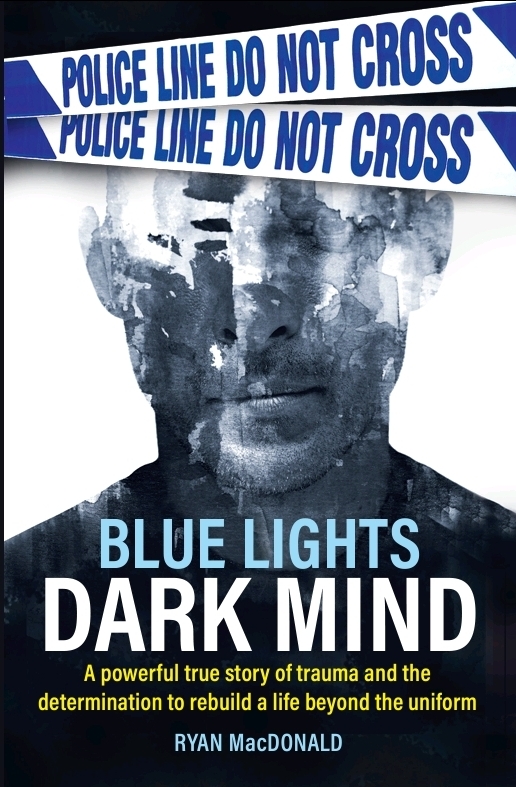
Prologue - The Silence After the Scene
The first thing that hits you isn’t the blood or the violence — it’s the silence. The silence of the reality that you are standing in a crime scene, a place where only a few hours before, a violent attack had left a victim dead, and now, crime scene investigators, donned in white suits and masks, stand trying to figure out what had happened.
The television was still playing in the background, the plate of half-eaten food on the table, the pots in the sink waiting to be washed, a life that not so long ago was normal, but had been interrupted and changed in a few moments, bringing to an end that normality and starting a chain of events that would change so many lives —including my own.
As I stood there, taking in what was around me, looking for evidence, clues, and signs, I felt the weight of the responsibility on my shoulders. I was the Crime Scene Manager—I was coordinating this crime scene and the scene of crimes officers in it; I was liaising with the Senior Investigating Officer and had the media outside watching me. I remember the attempt to make some normality of the situation, but it was perversely entwined with the horror. I looked in one direction and saw a home with pictures and ornaments. However, in the turn of a head, I could see violence, a victim lying face down in their own blood.
I had been in the police service for over eight years, had seen a lot, and had even served in Iraq during Gulf War Two, but never in my life had I experienced pressure like I did at that moment. The feelings were so strong—I was right there in the thick of it—but in reality, I wasn’t:
It was now over thirteen years later, and I wasn’t there, though my senses told me otherwise. A vivid memory was governing my mind and thoughts as I recalled the trauma. Even now, I just have to close my eyes—and I’m back there. The smell, the silence, the blood. That’s PTSD for you. It doesn’t knock. It just walks in. One of many triggers I now had and lived with daily. I was trying to learn tactics to help me forget this—and the many other traumas I had seen.
It had been a long road, lots of counselling and therapy, lots of talking to specialists, lots of down points—and as I stood on the stage, ready to walk on, I looked through a gap in the curtain to see how many people were there. I couldn’t quite see them all, but at a guess, I would say a hundred. I wondered why they wanted to hear me. I had to remind myself that I wasn’t a follow-up speaker, nor was I the warm-up. It was me and me alone.
Everyone in that audience was there to hear my story—the story of how an underprivileged lad from a low income family, who had always struggled at school and for his early life, somehow managed to find himself with experiences ranging from a firefight in Iraq, to working in Counter Terrorism Policing and then as a Crime Scene Manager, to leading major and critical incidents as a Senior Police Officer before losing it all to the demons of mental health.
I thought back to the jobs I had done, from vehicle pursuits that ended up with rolled cars, to snaring a paedophile who wanted to abuse a three-year-old girl, and even meeting The Queen, twice! I wondered at what level I should pitch the talk. Would I be detailed about the violence of the crime scenes I had managed, or would I tone it down a bit? When I talked, I generally scanned the room to see who was who and then adjusted from there. I wasn’t nervous—I never did get nervous when speaking. I spoke up because too many people stay silent. If my story helps just one of them break that silence, it’s worth every word.
I looked at where I was now—no longer a Police Officer. Betrayed by the job to which I had given nearly thirty years. How I was a different person from what I was only ten years ago, and the complete change in my life. I wondered if, at the end, I would get the typical questions, “How many dead bodies have you seen?” (I still didn’t really know the answer. I never counted, but certainly over forty.) “What’s the most violent death you have seen?”, “Have you ever been assaulted?” (Find me a Police Officer who hasn’t been assaulted.) And, “Would you recommend police as a job?”
The last one was always a difficult one for me—Policing was my calling—and I was proud of how I was as a leader. My team knew I had their backs because I never forgot what it was like to feel unseen.
I supported my staff, and they told me so. I was aspirational and wanted to keep climbing the career ladder, but the toxicity of policing became too much. The demands on officers had got out of hand, and the executive did nothing to support us. Line managers in policing had absolutely no experience in identifying the signs of poor mental health—looking back, I had many, yet not once was I asked if I was OK after seeing trauma. Not once.
This is why, as a leader, I always asked my staff how they were—always checked in, spoke openly about my own struggles to them. We’re all human, and mental health affects us all. It’s a pity I was never afforded the same leadership.
This book wasn’t in my plans. But when my mental health broke, I realised my silence was part of the problem. I was diagnosed with PTSD, and I found that my triggers were avoidable and could have had a different ending.
This isn’t a tale of medals or glory. This is the story of what happens when the trauma of a lifetime finally breaks through the body armour. When the horrors witnessed replay like a film reel you can’t turn off.
It’s about how I got lost—and what it took to find myself again.
Chapter 1 - The Early Days
I remember the day we moved into our new house—I must have been about four years old. My older sister, Vicky, and I were outside, while our parents and grandparents walked around what I thought at the time was a huge house. In reality, it was a newly built three-storey council townhouse on the edge of Dundee, a city already feeling the decline of its once-thriving industrial identity.
My bedroom was on the top floor, with Vicky’s at the opposite end of the hallway. It felt like an adventure. The estate was full of other young families, and wherever I looked as I grew up, there were kids to play with, friends on every corner, and neighbours who knew each other by name.
I still fondly look back on my first day at school. Mrs Brown was my teacher. At some point, she leaned over to me and another boy, also called Ryan with a “Mac” surname, and said she’d need to give us bigger stickers so she could tell us apart. I went to St Peter and Paul’s, a Catholic school only a five-minute walk from home. It was a beautiful old building—likely from the early 1900s—with worn stone steps and high windows that gave it a timeless feel.
Vicky had started at a nearby Protestant school but moved at some point, and I joined her at the Catholic school. I didn’t think much of the change, but my mum’s dad—my grandad—wasn’t too impressed. Though my granny was Catholic, both of my parents had been raised Protestant, and my grandad didn’t shy away from voicing his views. He’d jokingly call the chapel “the Pineapple” and would wind us up after First Holy Communion or Confirmation by asking, “How’s the Pineapple these days?”
He was a large, dominant and an imposing figure—always a gentleman with us, but the stories from his younger days painted a tougher image. In Dundee, he was known for talking with his fists, and that reputation followed him. My mum and her brothers grew up with a certain fear of him, and even as adults, he still carried influence over them.
I mention this because it mattered. My parents listened to him—about where to live, how to raise us, and what areas to avoid. They respected his opinion, maybe even feared it a little. My uncle, though, didn’t follow that advice. He chose a different area of the city and carved out his own path. Sadly, that decision came with consequences—two of my cousins went down a very different road than we did.
* * *
When my mum was pregnant with me, she was unknowingly exposed to someone in the early stages of measles. As a result, I was born with what you’d probably call today a disability. I had growth deficiencies in my neck and a pronounced squint in one of my eyes. Between the ages of two and fourteen, I underwent more than half a dozen operations. For a while, I had to wear an eye patch to try to correct the squint, which affected my balance and, unsurprisingly, made me a target for playground comments and bullying. The patch didn’t last forever—but the memories did.
Primary school was mostly positive. I enjoyed it, especially being around my friends, but I still carry a few scars—not from classmates, but from teachers. My Primary 6 and 7 teacher had a habit of making pupils stand up and solve maths problems before the class. Doing sums out loud was one thing but being forced to stand while doing it was even more intimidating. I was never good under pressure at that age. I recall the teacher launching the blackboard rubber at me more than once for not knowing the answer. His bullying was notorious, but back in the late ’80s and early ’90s, teachers had far more leeway than they do today.
By Primary 7, I’d had two more eye surgeries and was stuck with a pair of horrendous NHS glasses—thick lenses with odd-looking prisms. I became increasingly self-conscious about my appearance. I wasn’t academic. I liked the school setting, the structure, and its social side, but the actual learning didn’t interest me much. One of my proudest moments from that time wasn’t academic at all—it was winning a school competition to make a Christmas decoration from recycled materials. The prize was having your decoration displayed at the City Library, complete with your name and school.
I still laugh when I think about it because I’d completely forgotten about the homework until late on Sunday night. I remember sitting in my pyjamas after watching That’s Life with Esther Rantzen, sheepishly telling my mum and dad about the competition. I was told to go to bed—it was too late. But when I awoke the next morning, I found a handmade decoration waiting in the living room: a wire coat hanger, two empty ice cream tubs, and a load of random rubbish had been transformed into something festive.
My parents had stayed up and made it for me. So, when I stood proudly in the library looking at the winners tag—Ryan MacDonald, Age 11, SS Peter and Paul Primary School—I couldn’t help but think it should’ve read: Ruth and Alex, Ages 33 and 31, Hilltown, Dundee. I secretly think it was one of my mum’s proudest moments.
Looking back, we never had much. Back then, there wasn’t any official deprivation index, no talk of child poverty statistics—but it was obvious we weren’t well off. My sister Vicky and I had been joined by a new addition, our younger sister Shelley, five years younger than me and seven years Vicky’s junior. Despite the lack of space, I got to keep my own room as the only boy—Vicky and Shelley had to share. That always made me smile. They didn’t get on well; the age gap was too big. I used to lie in bed listening to their bickering and count my blessings that I had a door I could close.
Our dad was an intelligent man—quiet, reserved, but sharp as anything. He had a natural talent for maths and a practical kind of common sense that most people only wish they had. But he never reached his full potential. Instead, he spent twelve-hour shifts working in a rubber factory, walking over forty-five minutes each way, rain or shine. Neither he nor my mum drove; driving lessons weren’t something they could afford.
I still recall the rubbery smell clinging to his clothes when he came in from work. It might sound strange, but that smell comforts me even now. I’d give anything to smell it just one more time.
We didn’t know until later years how different life could have been for him—and for us all. He’d once been offered a commission in the Royal Air Force. His dream was to become a helicopter pilot, but my mum didn’t want to leave Dundee, so he turned it down. Years later, his cousin invited him to start a new life in Australia. Another fresh opportunity—but again, my mum wasn’t keen, so he stayed. He was a husband and a father, and he made the choice he believed was right for his family at the time. But I know my mum later regretted not taking the chance—especially when his cousin returned to visit, full of stories about his life under the sun in Oz.
Mum worked hard too. She had many jobs over the years—care homes, the local Spar, delivering Yellow Pages. She and my dad were grafters. They weren’t unemployed a day in their lives until Dad was forced to take early retirement at forty-six due to a back injury and a bleeding stomach ulcer. The work ethic in our house was strong—it had to be.
Still, we never had much. Every summer holiday, I’d sit around our housing scheme as one by one my pals disappeared on family holidays—usually somewhere sunny and exciting. We had just two holidays in my whole childhood: one to a caravan site in Berwick-upon-Tweed, where the uncles and cousins all came along, and one to Turkey when I was fifteen with Mum, Dad, and Shelley. Vicky, by then, was too cool to come.
We knew money was tight, so we made our own fun. We played manhunt around the estate, rode our bikes for miles, built dens up the Law Hill—the old volcano Dundee’s built around, and from which I was lucky enough to live just a few hundred metres from. We were out in all weathers, a proper gang of pals. I remember the street parties too, when the road would be closed off and all the parents came together with tables, music, and food. One was for Charles and Diana’s wedding. Another, I think, was for Andrew and Fergie. The occasions don’t matter as much now—but the memories are still crystal clear.
We weren’t blind to the struggles. I remember the debt letters, my mum hiding them before Dad got home. I remember the Provident loan woman coming to the door each week, and me being sent to say Mum was out, or to hand her £5 with the line, “That’s all we’ve got this week.” But here’s the strange thing—I never really felt like I was going without.
Christmases and birthdays were always full of presents. One year, I asked for a racing bike. On Christmas morning, there it was. It was obviously second-hand, but I didn’t care. I loved it. I remember riding over to meet a friend—his dad was a well-off doctor, and he had the latest Hi-Tec racer. He looked at my bike and clearly wasn’t impressed. But I didn’t care. I got what I asked for—and as it turned out, mine was faster than his anyway.
My sister Vicky was obsessed with branded clothes, like most teenagers were back then. Shell suits, Doc Marten boots, Sweater Shop jumpers—you name it, she had it. We didn’t have much to live on, but somehow, my parents made sure we never went without. Looking back, I still don’t know how they managed it. But we had what we needed, even if it meant sacrifices, which they never spoke about.
There was a running joke in our scheme: because my dad left at 6 a.m. and didn’t get home until after 6 p.m.—and because he mostly kept to himself during the rare hours he was around—some neighbours thought my mum was a single parent. That all changed one summer when I was about thirteen.
We were out playing manhunt, and someone had the genius idea to ask the parents to join in. About six of them agreed. My sisters and I decided to take a chance and ask our dad. We fully expected him to say no. But to our surprise, he got up, laced his trainers, and came out. Not only did he play—he played. He was all in, darting through gardens and round corners like it was a military operation. He was brilliant. It ended up being one of the best days of my childhood.
People were stunned. “Who’s that?” someone asked.
“That’s Vicky, Ryan, and Shelley’s dad,” came the reply.
“Really? I thought they didn’t have a dad!”
We didn’t care. He was there, he was playing with us, and it was awesome.