

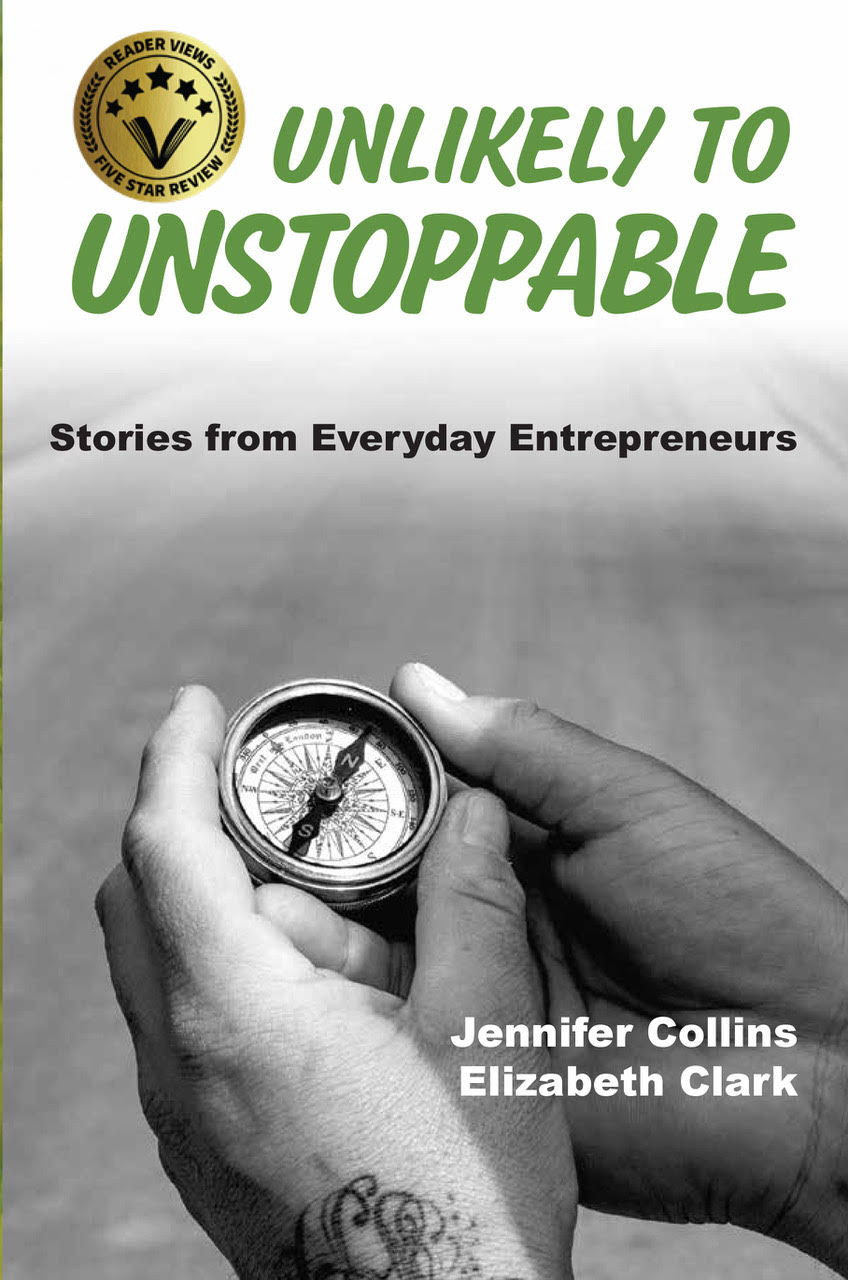
What do an investment banker, a Vegas disc jockey, a teacher, a property manager, a real estate agent, a salesman, a horticulturist, a hair stylist, a manufacturer of body products, and three contractors from assorted trades have in common? Honestly, starting out, the authors did not know if these folks had similar characteristics. We only had an inkling that there was something intriguing about them. The unknown was whether the people interviewed would have anything in common with one another, or with Ted. As it turns out, they did! In the tradition of qualitative research, the interviews were led by a standard question guide aimed at understanding how the interviewees made sense of their career paths, the ups and downs of carving out a meaningful place in their respective fields, and how they perceived constructs such as failure, luck, challenge, and success. Analysis of these twelve transcripts, as well as of Ted’s written memoirs, revealed several common themes. These themes expose ideas about choices and success that differ from widely-held assumptions about how people should proceed after elementary and high school education. Before we get to the themes, let us introduce each person whose story contributed to this overall under standing of how they moved from unlikely to unstoppable. A brief summary is provided for you to get started, as well as to use as reference as their stories unfold in future chapters.
Jeremy Jeremy could not get out of high school fast enough. The means to his end was joining the Marines. He grew up in an affluent suburb, where the heads of households were primarily highly educated professionals. His parents were no exception—a university professor and a counselor who expected their sons to choose the same route to success. But Jeremy’s ideas were far different. He accelerated his high school education, not to continue on an academic path, but to get out faster and serve. He envisioned the military as a place to build his physical strength, help others, and be the best. He embarked on that path just as he’d planned. An injury during a training exercise brought that dream to an abrupt halt. From butcher to lawn mowing to sales, the next several years were fraught with disappointments and failures aplenty, until he discovered a new, purposeful way to move forward.
Angie Angie grew up with parents who did not understand her dreams. She had big ones too—maybe an actress? A lawyer? But her mom, one of eleven children, was the only one that graduated high school and suggested to Angie the only paths she knew—a secretary, a waitress, a nurse . . . none of which appealed to Angie. Her father lacked enthusiasm or encouraging words for her, and she felt unsupported and alone on her path to independence. A self- proclaimed C-student, Angie realized becoming a lawyer was “unlikely” to become a reality for her. In her twenties, after bouncing from one waitressing job to another, Angie met her husband, loved being a stay at-home mom, and opened her home to care for other children. A mis-step on the stairs and a damaged lumbar spine ended that flow of income and forced Angie to rethink her future. What could this waitress, wanna-be actress pursue now? While she laid up with the injury, she had time on her side to rethink her goals and aspirations. But she needed a quick solution to help support her family. Little did she know that the answer would come to her in a want ad.
Tim Skateboarding and playing music meant everything to Tim during his high school years. He graduated from a school district that urged everyone to go on to college, so an English degree at the local state university seemed to check the boxes. At least for the moment. As his college years unfolded, being a disc jockey provided some income, but more importantly, it let him do what he loved—hang out with friends and share a common vibe. His drive for creativity was also nurtured academically, through a creative writing curriculum. But a university career counselor discouraged him by advising: “The only way to achieve any semblance of success with an English degree is to teach English.” Degree in hand, but with no desire whatsoever to teach, music seemed the only way Tim could envision fulfilling his dreams to spend his life being creative.
Laurie The outdoors, plants, and bugs excited Laurie for as long as she could remember. As a young girl in the seventies, she could not have cared less about any of the careers typically suggested for women. She tried out jobs like retail and food service, but without exception Laurie gravitated toward her love of plants. It was a struggle to figure out a career path that honored her love of the outdoors. One that came close, a conservation officer, struck her as too solitary. She wanted to be around plants and people! She joined a landscaping crew, but found herself in the middle of a sector filled with bias toward women who wanted to perform demanding outdoor work typically associated with men’s jobs. For a few years Laurie found a company that appreciated her contributions, until the company owner, also her mentor, sold the business to someone with such a different outlook that she saw no option but to quit. A young mother at that point, she and her husband encountered one financial roadblock after another while trying to forge ahead.
Chris Chris’s future options were so bleak, he shared at one point that everyone in his family was certain he would end up in jail or dead. His childhood challenges were consider able: constant struggles with school, countless hours alone after school, no father figure, and a mother struggling to make ends meet left Chris to fend for himself far too often. Unprepared for anything else, his entry into the work world consisted of food service gigs at night and jobs requiring extensive physical labor, such as driveway paving or roofing, during the day. Before long, Chris was a father himself, determined he would do things differently for his child. He just didn’t know how, especially when the small business he was working for dissolved. Chris did not have many options, but with a truck and some painting equipment, he resolved to find a way.
Rachel She knew what she wanted as a middle schooler. Rachel was most happy when styling her friends’ hair after school. It was creative and made her friends happy right along with her. Her high school guidance counselor (whose own mother was a stylist) thought hair styling was a big mistake. His authoritative take on that career, bolstered by his own bias, steered her away from what she loved. She took a couple of college courses, telling herself the college experience was important. Actually, she took one class, the only one that Unlikely to Unstoppable 15 interested her, multiple times. She liked psychology but could not focus, could not pass the course. Floundering, Rachel took a job or two for income. A wistful conversation with her dad resulted in Rachel finally pursuing the training she’d wished for all along. Certificate in hand, she embarked on a path strewn with the difficulties of starting a career with babies in tow. Many twists and turns later, she was ready to build a business of her own.
John John wanted to be a stockbroker ever since he was about five or six years old. He and his dad spent time together watching movies, and John was overcome with admiration for Eddie Murphy in the movie Trading Places. In that movie, the main character who worked for a Wall Street brokerage firm wore a suit and tie to work daily, carrying his briefcase. As a small child, John walked around the house with his “church outfit” suit and tie, carrying a little briefcase, pretending he was going to work. As he grew, he carefully observed those around him who were affluent. The lifestyle, the clothes, the homes with elevators—all those flashy displays appealed to John, likely because he did not have any of it. Growing up in a one- bedroom apartment, where he slept on the couch, created in him a drive to become the guys in movies. The problem was, he did not see the path before him. How would he afford the education to achieve this status? Was there a bridge he might take to the “good life”? Could he work his way into a suit and tie?
Alexandra From the age of six, Alexandra knew what she wanted to be when she grew up: a teacher. She worked hard in school, tutored others who seemed to struggle, and achieved her degree and certification in special education. It was a dream come true! She was able to find a job working with neuro diverse children and felt she had achieved it all . . . until her goals did not align with the administrator’s. Alexandra worked to assist each child to achieve life skills, but sometimes this fell outside the narrow, individualized educational plan. This mismatch of vision threatened her continued employment. She quickly realized that her dream, while right in front of her, was fading. How could she reframe her profession? Could she continue teaching in another format or location? Or had her spark for this profession gone out?
Shawn Shawn claimed to have been an “A” student who was totally bored by school. He had no recollection of any particular aspiration in his earliest years, except that by age eleven or twelve, he wanted to work. He found jobs cleaning pools and mowing lawns. Then, during his first year of high school, he just stopped going to school. He wanted the money to buy his own truck and lawn mowers. Shawn would do pretty much anything to accumulate those funds. He confesses that sometimes that meant being on the wrong side of the law. Eventually, in order to make things right with the legal system and try to qualify for a loan, Shawn went back to school, but not traditional high school. He found a program at the local community college that allowed him to earn high school credits while working. Having accomplished that, Shawn wanted nothing more than to get that bank loan and go out on his own. His parents could not share that vision. They had always worked for large corporations, enjoyed that security, and judged his decisions to be ill-advised. Shawn jumped from the high school equivalency program straight into a lawn mowing business ownership without one bit of training. He bought out an existing business, recruited his mother to help with bookkeeping briefly, but his vision was too stressful for her. He had no choice but to do it all on his own.
Jessica The oldest of several children, Jessica was a caretaker for as long as she could remember. Her parents split when she was young, and her mother struggled with mental health and legal issues. Jessica cared for her siblings, perhaps to her own detriment. She aspired to be a teacher, but college posed more problems than she could overcome, particularly as additional family responsibilities fell on her shoulders. After high school, the best path for Jessica to attain skills and knowledge of her own seemed to be enlisting in the Air Force. There she acquired experience and skills in a number of areas, from administrative work to counseling. Once discharged, circumstances soon found her as a single mother without a proper home for herself and her child. Getting to a place of stability seemed unlikely, if not impossible. That place of near desperation pushed her outside her comfort zone to enter the world of property management.
Paul Accountant to beverage center owner to landlord back to accountant, now contractor—Paul has had so many goals, so many visions, that it’s easy to lose count. Brought up in a middle-class suburb with dreams of carrying a brief case, Paul struggled through high school, emerging with a fixed idea: the best route to that briefcase was an accounting degree at the private university nearby, but his grades made that a long shot. Instead, Paul worked a couple of jobs right out of high school, but the limitations became obvious. A degree was calling to him. Once he had that accounting degree, the briefcase was never enough for Paul. He wanted more and tried to go for every single one of his goals—sometimes several at once. Failure was hard to take, nearly devastating. Nearly, but not quite.
Mona Mona’s dad had a huge influence on how her path started. As an immigrant, he had been tracked by the education system in his native country to be an architect. In accordance with that, he pursued that career yet the artistic aspect of architecture did not resonate with him. At heart, he was an engineer. When Mona started searching for her career options, her dad kept suggesting she consider engineering. She took some time, worked for a mechanical contractor, and off she went into engineering. She was one of three women in her class of seventy-five, and at her engineering company later, one of three female partners in the midst of more than forty men. It was a good career, but several years later, her sister became an influencing factor. As her own body changed and her sister became ill from cancer, Mona quit the engineering field to embark on producing all-natural body products. A one-woman show, making the lip balm and deodorant in a special kitchen at her home, Mona chose to leave what was familiar and start on a new road.
There they are. The unlikely dozen plus one. Each story teller shared life experiences in a unique way. Unique, but unified by common themes revealed during the interviews and led by their desire to move forward. The stories are organized into chapters with titles revealing the essence of the themes. After the authors provide theme descriptions, direct quotes from each individual bring their findings to life. The storyteller’s own words explain and amplify their personal experiences. Some stories were so rich and detailed that they illustrate more than one theme. In that case, the story appears only once but the astute reader will undoubtedly make connections to other themes along the way. Each chapter features the storytellers in the same order they were just introduced. Tales of Ted follow the interview results. His memoirs and journal entries provide countless stories and recollections to support the very same 20 themes. Add in memories from those who knew him, and Ted’s characteristics align well with the themes prevalent in the interviews. The characters, the portrayals of who and what influenced them, their world views, and the connections made along the way each embody the same tree-like image that Ted’s life portrayed. Rather than sunshine and rain, their roots of hard work are nurtured by perseverance and positive attitudes.


Comments
This was difficult to truly…
This was difficult to truly understand how the book is, given that most of the 10 pages were the introductions of the people involved. I think a good edit would help improve the flow and tighten up some of the language as well.
It's a really interesting…
It's a really interesting theme. I am so excited to see how this unfolds.
I get the premise and…
I get the premise and desired outcomes of the study but I question the wisdom of using up your quota of 3000 words to give a brief summary of each of the subjects. My advice would have been to launch into the first one immediately which would then have given the reader a far better insight into the template for those that follow. Just a thought.