

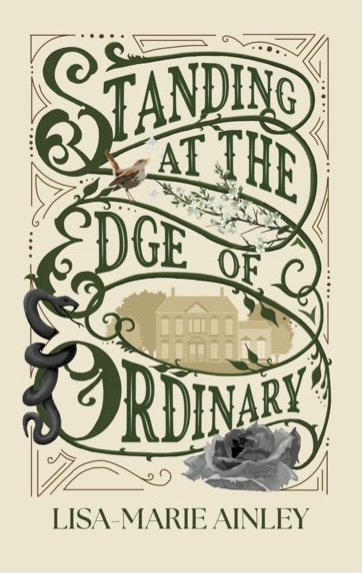
Chapter 1
Harriet Blackthorn was a woman of formidable intellect. In a time of sweeping progress and ingenuity, when the great men of the world were rising to power, she could have bested them all, but for one small problem.
Harriet was a woman.
Raised on Latin and logic, she had long held the opinion that in a society afflicted by poverty of thought, education was wasted on determinedly unintelligent men. It could not compensate for a lack of natural intelligence and common sense. Nor could their breeding compensate for good manners.
She closed her eyes, lulled by the gentle rocking of the carriage—the hypnotic rhythm of iron wheels against the road. Deep in her own thoughts, she resided in that wonderful portion of the brain where memories cling to the present with potent force, determined not to be forgotten.
She thought of her father—how thoroughly he had loved her. He would have given her anything she wanted, had she ever asked. But she had always been content with his affection and her books. She touched the ring he’d given her, spinning it around her finger.
The carriage lunged violently as the wheel dropped into a rut. The movement wrenched her into the present, and she clutched the toddler in her lap. They had arrived in town, and business awaited.
Harriet alighted the carriage and lifted Lillian out, setting her on the pavement. She walked with purpose, punishing the ground underfoot. Lancaster, she thought, was a terribly inconvenient place: ill-suited to the needs of a pedestrian. It was as though it had been built on a rolling sea.
Fallen leaves were sodden with rain and slippery underfoot in the narrow cobbled streets. It was late September, and the first signs of autumn were long past. A granite sky scowled over the town, and damp wrapped itself around her. She shivered now and then, partly from the cold and partly from the shock of that morning’s post.
Aggie had brought it to the breakfast table with her usual cheer. “Here you go ma’am, just the two today,” she said, handing her the envelopes with a wrinkled brown hand.
Aggie was slight and sinewy, but had the strength of a woman half her age. She’d been Harriet’s nurse, housekeeper and the only motherly figure she’d ever known.
The first of the letters had the British Army seal. She’d hesitated before breaking it. Her husband’s letters had never thrilled her. They were littered with dutiful affection, but they had never loved each other—not really. She hadn’t seen him in almost three years, but that didn’t matter. All she had ever wanted was right here with her.
When she saw the address written in an unfamiliar hand, she had known immediately.
Dear Mrs Blackthorn, It is with regret and deepest sympathy….
Arthur was dead—taken by fever in India.
She’d opened the second letter. A solicitor. Debt. Tremendous, crippling debt.
She still couldn’t believe it. How could he possibly have left debt? Her father left her a sizeable fortune, but in truth, she knew very little about it once it passed into her husband’s possession. Surely he hadn’t squandered it all. He couldn’t have.
The clock at the town hall struck the hour. It ticked on, knocking seconds dead at the moment of their birth. But that was life, she supposed; relentless, inevitable.
For the first time in her life, she was at a loss for words, her course of action unclear. The sensation was novel to her and altogether uncomfortable. Her father had prepared her for many things in life, but not this.
Lillian smiled up at her. She was the one exception to Harriet’s dispassionate manner. The only one she’d ever loved without restraint. The first and only person to break through Harriet’s ironclad exterior.
My poor darling, Harriet thought. She was too young to understand she’d just lost a father whom she had never met.
* * *
Market Street soon came into view. A neat row of almost identical shops with smart bow windows. Painted signs hung on metal chains, jutting out into the street like pointing fingers. They appealed to Harriet, and she always walked the extra distance to come here rather than go to the untidy shops she passed along the way. If a shopkeeper didn’t see fit to keep his shop presentable, then a satisfactory standard of work inside was most unlikely.
They entered Mrs Petty’s shop to order Harriet’s mourning attire. A bright-eyed, stout woman was behind the counter. Her red hair fizzed about her in a little cloud. “Good morning, Mrs Blackthorn. Are you well?” She said in a heavy northern accent. “And how’s you, little missy?” She beamed at Lillian, and leaned over the counter to pinch her cheeks. “Is someone going to get a nice new pretty dress today eh?”
“No, Mrs Petty. I’m afraid we’re here on a more sombre business.”
“Oh, I’m sorry to hear that, Mrs blackthorn. Now’t too serious, I hope?”
Harriet covered Lillian’s ears. “I received news from India this morning that Mr Blackthorn has sadly passed.” She delivered this news as calmly as if she were discussing the weather.
“Oh Lord! Oh, dear Lord! What happened my dear? Was he killed in battle?” She looked almost hopeful, Harriet thought. As though such circumstances would have made it all the more thrilling.
“No, nothing so honourable. He contracted a fever.” Harriet explained.
“Oh, Mrs blackthorn, you poor thing, and that sweet child. That dear, sweet little child, to be left without a father. Good Lord!” She splayed a hand over her heart in a theatrical gesture. Mrs Petty looked so distressed that anyone might have thought it was her husband.
Harriet let her finish before removing her hands from Lillian’s ears.
Mrs Petty took her measurements in the fitting room, where mannequins stood like sentinels, guarding the mysterious world of cloth and haberdashery. It was a cave of wonders. Scraps of lace and linen were strewn about the floor. Lengths of ribbon wound their way around furniture legs, and strands of glistening gold embroidery thread caught the light. Beads of unimaginable colours spilled from tiny wooden drawers like jewels, and bolts of colourful silk stood in every corner of the room.
She flitted about like a trapped bird, offering Harriet tea, biscuits and too much sympathy—none of which she found useful—but accepted with grace all the same. That sort of attention always made her uncomfortable. She never knew how she was supposed to react to it.
Mrs Petty took her order with meticulous attention to detail, making a list of the articles required. The silk was expensive. Too expensive now, so Harriet settled on the bombazine.
“A very fitting choice,” Mrs Petty said, her eyes crinkling at the corners. “Much better than the silk. I always think it shows a deeper sense of loss.”
Harriet bristled. As much as she liked her, she was not interested in Mrs Petty’s thoughts on the matter. She was even less concerned with how deep a sense of loss was portrayed by her garment choice. She hated that a person should have to wear black to signify to the rest of the world that they had suffered a loss. It felt like advertising your emotions on the outside, and in her opinion, that was not where they belonged.
Nevertheless, she wasn’t brave enough to renounce the concept of mourning dress. For now, her clothing would have to portray the devastated and grieving widow. The idea made her stomach clench.
She’d known Arthur for most of her life. He was a friend of her father’s, and when the time came that her father proposed him as a husband, she considered him an agreeable match. He had a respectable income, as well as a large estate, albeit entailed. He came from a good family and was a decorated British Army officer. She knew nothing of love or the silly foibles that preoccupied other girls her age.
Despite having no inclination toward matrimony, she accepted him to please her father. At just seventeen, she’d known nothing of the trials of marriage and what it meant to a woman’s independence.
They had only been married for three months when Arthur was posted to Delhi, India, and so she’d spent the majority of her married life, including childbirth, without him. In short, she felt nothing greater than a mild fondness for him. Any esteem in which she’d previously held him now dissipated under the weight of her situation.
When the fitting was done, Mrs Petty dispatched a boy to Mr Moorby’s for the necessary items. She promised to have one simple dress and veil completed for Harriet to collect in two days’ time. The rest she would deliver upon completion. Harriet paid the deposit and bid Mrs Petty good day.
Lillian had been very well behaved during their transaction. Harriet was astonished at the level of restraint the toddler had shown in such a treasure trove of objects. As a special treat, she took her to the sweet shop before they continued any further.
They crossed the street to Marven’s, and Harriet lifted her up to look in the window. Lillian’s eyes grew wide with wonder when she pressed her tiny nose to the windowpane. She wriggled with excitement, and gold ringlets bounced about her shoulders.
The old man inside peered at them from half-moon spectacles. Wiry, disordered eyebrows framed his sallow face. He looked down his long nose at them, then motioned impatiently for them not to touch the glass pane.
Lillian gave a snort of laughter that fogged up the glass with her warm breath, and the old man’s eyebrows shot up in horror.
They entered the shop, and Lillian squealed, delight apparent on her face as she took in the countless rows of sweet jars. She bounded off toward the back wall to inspect them.
Harriet closed her eyes and breathed in the sweet scent of childhood. The overwhelming smell of sugar came first, sweet and sickly. Then a full-bodied vanilla and toffee, the tang of lemon, fresh bright strawberries, cold sharp peppermint and the bitter snap of liquorice. She remembered buying humbugs as a little girl not much older than Lillian. Fattening her cheeks with sweets so that she could hardly close her mouth. How her father had laughed at that.
She bought a penn’orth of humbugs in memory of him, some pear drops, because Aggie liked those, and Lillian chose a bright, cherry red lollipop. She waved it about like a magic wand in between licks and Harriet laughed, thankful for the momentary release.
* * *
By the time they reached Castle hill to see the solicitor, Lillian struggled to keep up her mother’s brisk pace. Harriet carried her the last few yards and set her down on the wooden bench in the waiting room.
Mr Oglethorpe had been the family solicitor for several years and was a trusted friend of her father’s. She took the letter to him, with the intention that he might suggest what could be done regarding the outstanding debt.
The letter stated that the debt was owed to a Mr Piggot of the East India Company, to whom Mr Blackthorn had lost several games of cards with particularly high stakes. She wasn’t aware that he gambled and was suspicious of the claim. The letter, however, made reference to the existence of a note authorising the debt. According to the letter, the note was written in Arthur’s hand and was at the offices of Swainson and Goodier for her to evaluate if she so wished.
“Good Heavens Mrs Blackthorn, what a pickle,” said Mr Oglethorpe, his whiskers bristling. “Eight hundred pounds! I can’t imagine what would take possession of a man to indulge in such a thing.” He shook his head and his drooping jowls flapped. “I must say, it’s outrageous, quite outrageous.”
“Quite so, Mr Oglethorpe. I was terribly shocked by it.” Harriet said.
“Yes, yes, I can see that it would be quite distressing for you.” He paused, studying her, and then continued. “Is it your intention to see this note, bearing your husband’s signature?” He raised one bushy eyebrow as he asked.
“Do you think I ought to authenticate it? I mean, if I found it wasn’t in my husband’s hand, do you suppose there’s anything could be done to repudiate the claim?” She brightened with hope at the possibility.
Mr Oglethorpe cleared his throat. “Oh no, no, that’s…not what I meant. The note would be legally binding in most courts, especially when the creditor is a man of Mr Piggot’s standing. I’m afraid, considering his rank and the ramifications if such a course were to be undertaken, I very much doubt anything could be done. I strongly advise you against such actions. I merely thought that it might settle your mind perhaps, to see it for yourself?”
Not surprised by his answer, she was no less disappointed when he gave it. “In that case,” she said, “I don’t suppose it would be beneficial to see it. I shall have to let it stand.” She sank deep into the chair and sighed, as though she might breathe out the disappointment in one long breath.
The room was dimly lit and smelled of beeswax. It stirred a memory of her father at home in his study. A room much like this one, the walls wrapped with glossy wood panelling and lit with warm firelight. She remembered Aggie, much younger then, waiting by the door to put her to bed. The smell of her father when she’d climbed onto his lap to say goodnight—warm and soapy, and the comfort she felt with his strong arms around her. Her chest ached at the memory.
Mr Oglethorpe coughed and cleared his throat again, bringing her attention back to him. He offered her a sad smile, and they set about the business of discussing her options. They drew up a list of her dispensable belongings and their monetary values; the sum of these assets falling far short of the amount owed to Mr Piggot. After careful consideration, they decided the only feasible option was to sell the house and furniture. Since Arthur’s estate was entailed, it could not be sold, and in the absence of a male heir, would pass to his cousin, Edward Blackthorn.
Harriet had never had much of a relationship with Arthur’s family. He was an only child and his father was already dead when she married him. When she gave birth to Lillian, her mother-in-law had visited to see the baby but, disappointed it wasn’t a boy, had never returned. There would be no financial help from them. There would be no help from anyone.
Mr Oglethorpe set a date for the house to go to auction in two weeks’ time. Better to deal with such matters efficiently. “I’m dreadfully sorry for you, Mrs Blackthorn. There really ought to be something done to protect women from this sort of thing. They’re seldom victorious in matters of law. I’m afraid it’s most unfair.” He smiled at her with genuine empathy.
“Thank you, Mr Oglethorpe. I appreciate your kindness and your good counsel as always.” She shook his hand and returned to the waiting room to fetch Lillian, who was fast asleep on the bench.
Outside, the sky had dulled to pewter, and the wind tugged at Harriet’s shawl as she stepped from the solicitor’s office with Lillian sleeping against her shoulder. She carried her through the streets, her arms aching from the weight of what lay ahead.
Behind every closed door, a life went on unchanged. She could no longer remember what that felt like. She had done what needed to be done, and the finality of it pressed against her ribs like a slow suffocation. The house would be gone in two weeks. She did not know where they would go, only that they could not stay.
Chapter 2
The fortnight preceding the auction date passed quicker than any other in Harriet’s life. Her calm and collected demeanour was fraying at the edges. The last two weeks had felt strange—unnatural. As though she were stuck at the turning of the page between one chapter and another.
There had been no funeral as such, just a small remembrance service held in Arthur’s honour. What was left of it, that is. His family did not attend, despite being informed by Harriet. There would be no headstone, no monument erected in his memory, where a widow or a daughter could lay flowers. It was as though his life had evaporated, with no more ceremony than steam escaping from the kettle.
She had no idea what would become of herself and Lillian, and she was unaccustomed to such uncertainty. It became impossible to visualise what their lives might look like in the next few months.
She had made all the necessary preparations for their departure on Sunday. The furniture was packed and sent to the auction house, excluding a few choice items, which were still necessary. It had brought a handsome sum at the sale last week, enough to see her through a few months at least, provided the house also made its expected price. Two beds, a breakfast table, three chairs and a washstand were all that remained now. The rest of their belongings were packed into two tan leather portmanteaus and a large trunk.
She stood in the parlour, staring out at the inky night as it glared back, wild and ill-tempered. Trees hunkered down and turned their backs to the wind, their boughs groaning and branches whipping and lashing about. A few remaining leaves clung with defiance to the outstretched fingertips of twigs.


Comments
An excellent piece in which…
An excellent piece in which the writer has captured just the right tone and register to make the time and the setting plausibly real. The characters are wonderfully defined, their voices distinct and in keeping with their respective stations in life. I noted a few instances of repetition that one more edit would address but notwithstanding, this excerpt stands out for all the right reasons.
Great premise and well…
Great premise and well-written start. There are a few grammatical issues, but nothing major. I like the characters, and the dialogue felt very natural for the time.
Engaging and refreshing from…
Engaging and refreshing from the very beginning. The writing feels confident, fluid, and immersive, making it easy to stay invested in the narrative. A strong storytelling voice combined with vivid narration makes this a very enjoyable read.