

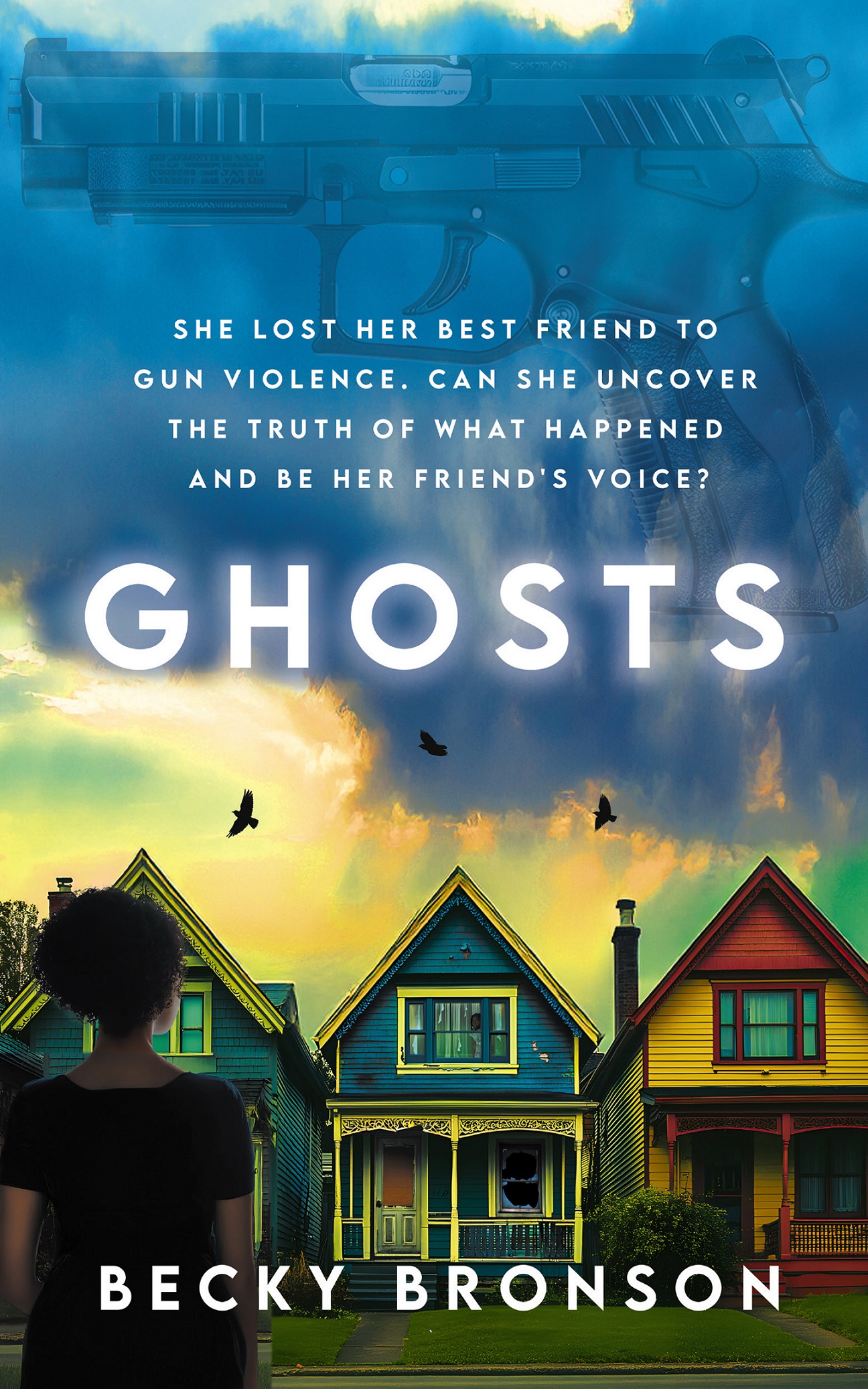
Chapter 1
It started as an ordinary summer day, though for five-year-old Danny and his ten-year-old sister Em, life would never be the same. After spending the morning with Em and her friend Libby at Libby’s house down the street, Danny now sat by the tiny window in his dark and gloomy bedroom at home, watching the two girls play hopscotch in his driveway. A single tear fell from his eye as their laughter filtered through the window screen, the sound carried toward him by a hot summer breeze. He wished that heat could penetrate inside him and pierce through the chill of shame and loneliness he felt. When he had tried to join them, Em had snapped at him. “Go away! You’re being a pest!” He didn't think he was a pest. He simply wanted to play, but it was clear the girls didn’t want him around. Well, that wasn’t totally true. Em wanted nothing to do with him, but Libby had smiled shyly at him, as if to say, “I don’t agree.”
Danny liked Libby because she often persuaded Em to include him. But on this day, Em didn’t back down. Through the open window, Danny heard Libby ask his sister why she was so mean to him. “He’s a wimp,” Em said with a shrug.
Bored and dejected, Danny trudged down the hallway, bristling at the sight of his older brother Sean’s locked door. It seemed like no one wanted to play with him. He considered walking away, but knocked quietly, fully expecting Sean to bark at him like Em had. To his surprise, Sean let him in.
Plopping himself on the floor by Sean’s bed, he asked, “What’s a wimp?” At fourteen years old, Sean knew everything, or so it seemed to Danny.
“It’s someone who’s weak and cowardly,” said Sean. “Why do you want to know?”
“That’s what Em thinks I am. I heard her tell Libby. Do you think I’m a wimp?”
“Nah, I think you’re just a little shy, is all.” He hesitated. “Listen, can you keep a secret?” Danny nodded solemnly. Sean reached under his bed and pulled out a cloth bundle. He looked straight at Danny. “I got this yesterday, but no one can know I have it. Mom would kill me if she found out about it.”
Danny watched Sean unwrap the parcel. Inside was a gleaming pistol, the likes of which he had only seen in video games. He leaned forward. “Is it real?” he whispered.
“Yeah, it is. It’s a ghost gun, made here, in this city.”
“I don’t believe it’s real. I bet it doesn’t shoot real bullets.”
“Sure it does. I tested it yesterday.”
“I want to test it.” Before Sean could blink, Danny grabbed the gun and dashed out of the room, down the stairs, and out of the house.
Chapter 2
Em woke with a start. She sat up in bed and covered her eyes with her hands. That damn dream again. Would she ever be free of it? She hated reliving that memory from Gloomsbury, the place where she grew up. Her ten-year-old self playing hopscotch in the driveway with her best friend, Libby Lewis. Hearing a shout and looking up. Her 14-year-old brother Sean racing after five-year-old Danny. Sean yelling something at Danny and tackling him. A loud explosion, and Libby motionless on the ground, a red spot blooming on her chest.
She curled her arms around her knees, her heart still beating out of control. A dream was a collection of random thoughts and could be changed. But this was real. It happened, and there was no way to rewrite history. Though Lord knew, she had tried. Fourteen years later, she still felt at the mercy of this nightmare.
“It’s not your fault, Em,” her brother, Sean, had told her again and again. “Libby was in the wrong place at the wrong time.”
Yet how could her driveway be the wrong place? It made no sense. In an instant, Em's world had shattered, leaving her with a memory that often woke her at night. Drive-by shootings happened where she grew up, yet she had always felt safe in her own yard and driveway. Sometimes, tensions between street gangs ran high, and her parents did not allow her outside. But this had not been one of those times.
She rubbed her eyes, as she often did on awakening from this nightmare, trying to piece together the forgotten parts of her childhood. Her memory of what happened was fuzzy. She recalled Sean yelling at Danny. Her parents were out, so Sean must’ve called the police, because soon, a single cop car pulled up. Two officers emerged, one black and one white. Em recognized the black cop and was relieved to see him. He had been hired about a year earlier and often patrolled in their predominantly black neighborhood to keep the peace. He was friendly enough to all the black families on the street.
The white policeman, though, was a stranger to her, and his gruff manner made her uneasy. He had close-cropped hair and a wad of chewing gum in his mouth.
Em felt the terror of her ten-year-old self as the two men examined Libby’s body. Soon, other officials arrived, and Em watched in horror as they wheeled her friend's lifeless body into the back of the ambulance.
She recalled a heated discussion between Sean and the two policemen. The white officer grilled her brother. “I just need a statement from you, okay? You say a car sped by and whoever was in it must’ve fired the gun, correct?”
Sean nodded without looking at the man. “Yeah, I saw a man running down the street, dodging parked cars.”
That was news to Em. She hadn’t noticed a speeding car, and if anyone besides Sean or Danny was running outside, she hadn’t seen it.
“Are you sure about this?” the black officer asked. Sean nodded again.
“We got our statement. Leave the boy alone,” said the white police officer. His partner shrugged and turned to question Em. But at that moment, her parents showed up and ushered her inside.
Em felt her memory was a giant jigsaw puzzle, and each time this dream occurred, more pieces were added. This morning, she recalled how two days after the shooting, the black officer had returned to talk to her. She was nervous at first, but he said he wanted to make sure they knew what had happened, for Libby’s sake. He faced her in the driveway, as her mother hovered in the background. “Can you tell me what you and your friend were doing?”
“We were playing hopscotch. Right here.” She pointed to the chalk squares on the ground.
“Which way was she facing when…”
Em squeezed her eyes closed and tried to remember. “It was her turn. She was here, facing this way.”
“Are you positive?” he asked.
“Yeah.”
“Did you see a car go by at the time or a man running down the street?”
She shook her head and started to cry. “It was quiet on the street. I didn’t see or hear anyone go by.”
Em’s mom yelled, “Listen, this girl’s been through enough trauma. Leave her alone!” She shooed the officer away, and within a week, her family had moved from the neighborhood. They spent a few weeks with Em’s mom’s sister in a cramped one-bedroom apartment before relocating to a small house in a new town. From then on, no one ever discussed what had happened with Em.
“Forget the past,” her mom said if the topic ever came up. “We should’ve moved outta that city long ago.”
But Em couldn’t forget—at least not completely. The next two years became a blur in the mind of her future self. She vaguely remembered Sean and Danny were inseparable, while she felt like an outsider. The trauma of that day left its mark on them all, especially Danny, changing him from a fun-loving, vibrant kid to a boy who only spoke to his older brother.
The three children shared a mother, but Sean had a different father and fought with his stepfather constantly. After two years, he moved back to the city they grew up in to live with his dad. Danny, at seven years old, refused to talk to any of them, and Sean’s father agreed to allow him to join Sean as well. Em was glad to be rid of them both. Secretly, she wondered if Sean's father was also Danny's father, though she was certain her mother would deny it. The idea was ludicrous, given that Sean was four years older than Em, and Danny was five years younger. But the thing was… though they were all black, Em was light-skinned, like her mother and father, yet both Sean and Danny were blacker than coal, similar to Sean's father. She hadn’t spoken to either Sean or Danny since, and now, at twenty-four years old, she wasn’t even sure if either of them was still alive.
Em knew what triggered the dream this time. Gun violence was in the news once again. Another mass shooting yesterday—the third in the space of three weeks. Sadly, she shook her head. It had been fourteen years since the death of her friend Libby from a stray bullet, and deadly weapons were still readily available. From mass shootings to gang violence to accidental shootings, it seemed like never a day went by without some grim report. Would it ever stop? To Em, this was a black-and-white issue. As long as the means to commit these violent, horrific acts existed, innocent people would die by gunfire.
She glanced at her clock: 4:30 a.m. She was wide awake now and figured she may as well get up and go to work. As a journalist for the Post, a mainstream paper, she kept odd hours, and her boss didn’t mind as long as she met her deadlines. Often she was the first one into the office in the morning and got her best writing done before the office became a bustling place. She wanted to get off a piece about this latest shooting as soon as possible. Though Em rarely wrote of gun violence, the events of the past few weeks had her re-thinking that. Just yesterday, she had told her boss, Jonathan, that she was considering tackling this issue. Maybe it was time to face those demons. It was the least she could do to honor her childhood friend.
She arrived at the office, surprised to see Jonathan already there. Usually, she had the place to herself for at least an hour.
“What’s up?” she asked. “It’s not like you to be here so early.”
Jonathan stared at her. Something was wrong—she could see it in his eyes.
“Don’t start writing yet,” he said as she turned on her computer, itching to log in.
“Why not? I want to get out a story about yesterday’s shooting. We need to be on top of this one.”
“Not so fast,” he cautioned her. “I thought you might want to write about this, and I’m getting mixed messages from upper management. You know the paper is under new ownership, right?”
“Of course, but we were told the sale was ceremonial and nothing would change.”
“We were told that, but it may not be the case. Our new owners have a different agenda. They don’t want us highlighting certain things. Gun violence is on top of their list.”
“That’s crazy,” Em said. “This paper was built around reporting on issues like this. I’ve written about social justice for my entire career, and this is the most important issue of our time.”
“Yeah, well… that’s why I’m in early. I need to tell you to tone it down. Libby is being let go.”
Em was stunned. “You can’t be serious,” she said. “They can’t fire her—she doesn’t even exist.”
Jonathan cleared his throat. “Right, well, you know that and I know that, but the new management here doesn’t. They don’t know who specifically writes as Libby Lewis and they don’t care. That persona can no longer write for this paper.”
Em stared at her blank computer screen. For two years, she had been a lead journalist for the Post and a champion for human rights. She had written about many issues, ranging from corporate greed to online gambling to voting rights. Management had given her free rein to write about a variety of topics, and she wrote most of her articles using her pen name, Libby Lewis. Em did that to hide her own identity from the public. That arrangement had worked perfectly until now.
“So… if they fire Libby, what happens to me?” she asked. The articles she wrote as Emiline Jackson were fillers. Nothing earth-shattering. She usually did the minimum needed to avoid raising any eyebrows among the company executives while focusing the bulk of her work on writing as Libby. She couldn’t imagine writing as Emiline full time.
Jonathan shrugged. “I don’t know how this will play out. Maybe they’ll change their mind, but for now, Libby needs to stand back. I mean it, Em. Don’t press your luck with this. I can’t keep your identity a secret if you make a stink about it, and you don’t want it to get out that you’re Libby Lewis.”
With a sigh, she realized he was right. She had no way to fight this. Because of the sensitive nature of what Libby wrote about, Em felt it was critical for her true identity to remain separate from her pen name. Still, it irked her. Fourteen years ago, she had lost her best friend. She had promised herself she would be Libby’s voice and stand up for those who couldn’t speak for themselves. She looked at Jonathan with tears in her eyes.
“Gun violence is something I’ve wanted to write about for years. It’s the reason I do what I do. But I’ve been afraid. Since I started working here, I’ve been dancing around it, thinking it was too big, that I needed more experience, more practice, a bigger following. But lately, I’ve been having this dream. I keep seeing my friend Libby, and I need to be her voice about this. It’s time for me to tackle this. I came into work this morning thinking this was it, my next big break, only to be shut down before I could even get started.”
“I’m sorry, Em. Truly I am. Things might change in the next few days, but for now, you need to stay away from this issue.”
Em fumed all day, while she worked on an article profiling one of Washington’s newest restaurants. She couldn’t imagine feeling more bored. Since she had come in before sunrise that morning, she left work early, a luxury she rarely took advantage of when pursuing an important story. Dejected, she trudged home. Her mood perked up at the thought of her weekend plans. Typically, Em spent most weekends alone in her apartment. This weekend, however, her college roommate and closest friend, Cara, hosting a brunch so Em could meet her partner, Ron, who she had recently moved in with. Aside from Jonathan, Cara and Ron were the only friends who knew of her dual identities. Together, they managed a non-profit corporation focusing on gambling addiction, and during the past year, Em (in her persona as Libby) had worked closely with them to uncover corruption in the online gambling industry. However, all the work had been remote, and Em had yet to meet Ron in person.
Em had promised to bring something for brunch that Cara had raved about in the past. Hopefully, Ron would feel the same. Em loved introducing her white friends to foods they would normally never eat. Shrimp and grits, along with banana pudding, she thought. Cooking soothed her, especially when she could listen to music. In the privacy of her home, she put on her favorite music by Beyoncé and set to work in the kitchen. The perfect blend of rhythm and blues, soul, pop, and hip hop, along with the tantalizing odor of peppers, garlic and onions, calmed her frayed nerves. As she cooked, she thought of her friends. Both Cara and Ron had lost their jobs at the CDC (Centers for Disease Control) because they had attempted to research some things that were considered off limits. Em felt they would understand her dilemma and was grateful she could turn to them. She looked forward to being with them, though she grudgingly realized she needed their advice more than she cared to admit.


Comments
The premise of the story is…
The premise of the story is an awful reminder of the reality of gun crime and acts of appalling, wanton violence inflicted upon innocent victims because of the lack of will to impose much greater restrictions on gun ownership in the U.S. The execution of the premise doesn't quite live up to its billing. There's a powerful story here which is struggling to come out but needs to be told in a far more direct and compelling way.
This has a great hook to get…
This has a great hook to get the reader's attention. What a tragedy! I'm interested to see where it goes from here.
The story presents a very…
The story presents a very emotional situation that immediately draws sympathy for the characters. The tone carries the weight of the subject well. Strengthening the opening hook could make the beginning even more compelling and pull readers into the story more quickly.