

Chapter 1
DREAM UP YOUR AMAZING LIFE SO YOU CAN HAVE ONE
Machine guns. Barbed wire. Guard dogs. That’s what freedom looked like the first time I tried to imagine it. My sixteen-year-old self stood on the wrong side of the Berlin Wall, every breath a reminder that I was trapped. A girl with big dreams, locked inside a gray world that told me I wasn’t allowed to want more. But even then, something in me refused to stay caged.
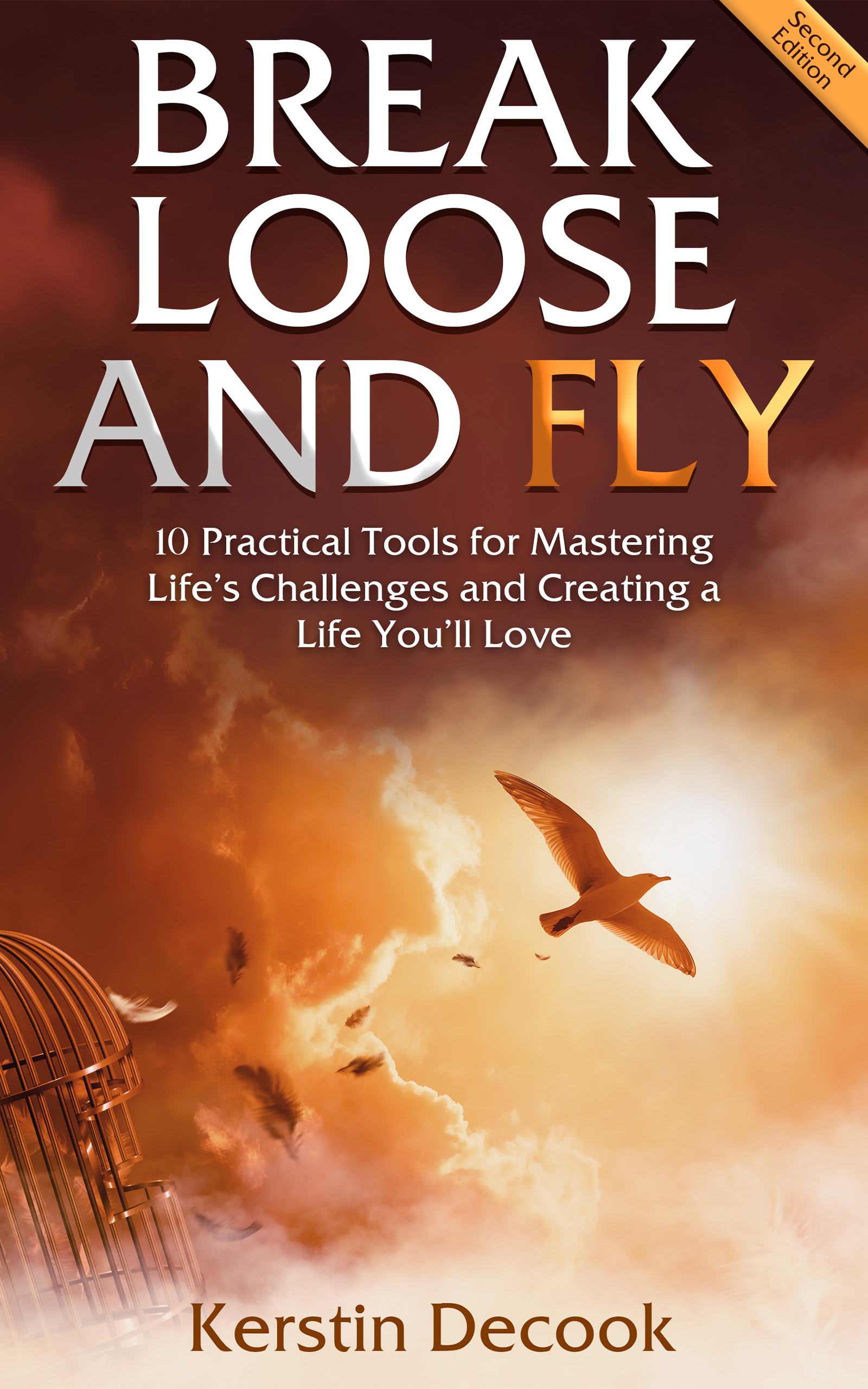
I wasn’t always a dreamer. For a long time, I was just a girl trying to survive behind a wall—literally. The kind of wall that didn’t only divide a country, but every thought, every hope, every breath. That’s when I learned something powerful—from a little bird in a cage.
Imagine the sweet, melodic song of a canary. So delicate. So clear. So beautiful. That’s what draws people to them—the way they sing even when they’re trapped. Canaries originally come from the Macaronesian Islands, warm, breezy volcanic islands off the coast of Europe and Africa. Think dramatic cliffs, wild colors, golden sunshine. If I lived there, I’d probably sing all day, too. But most canaries don’t get to live in paradise. They live in a cage. And yet, they sing. That’s why we love them so much.
Growing up in Russian-occupied East Germany, I felt like a little canary myself—stuck in a cage everyone pretended was fine. Depending on your age, you may or may not know anything about the GDR—the German Democratic Republic—which was formed after World War II. But let’s be real—“democratic” was the biggest joke of all. Russia took control of the eastern half of Germany and built a Communist regime straight out of Stalin’s playbook. Every aspect of life was dictated—what to do, how to think, what to believe.
Freedom? Forget it. Your neighbors were assigned to spy on you. Being a “good citizen” meant reporting your friends, your coworkers—heck, even your own family. Trust didn’t exist. Everyone was watching everyone else. And daily life? A total grind. Want groceries? Better have connections. Need clothes? Good luck finding your size. As more and more people escaped to the West—because life was better over there—the government finally said “enough.” In 1961, they threw up a wall. Literally overnight. Concrete, guard towers, barbed wire, and guns. Try to run, and you got shot. End of story. That was the world I was born into. On the wrong side of that wall. Stuck. Controlled. Caged. I spent the first sixteen years of my life there. And let me say it straight sister: life sucked.
Our leaders made sure we followed their rules and saluted them like good little citizens. Joy? Unnecessary. Paint? Frivolous. Color? Pointless. Everything was gray—the buildings, the streets, the air, the mood. The only thing paler than the bananas were the oranges — which tasted like straw — and the greenish, partially rotten potatoes that dripped through the bag as you carried them home from the grocery store. Yuck! And the lines? Oh girl, the lines. If you saw a line, you got in it. Didn’t matter if you knew what was sold at the end. If there was something to buy, anything at all, you stood in that line. Rain, frost, snow—didn’t matter. And if you were lucky, you might take home something usable. If the line dissolved before you got to the front, that meant the goods were gone. Empty-handed again.
One of the chores I shared with my sister was lining up at the bakery after school. Bread, buns—whatever we could get. I remember peeking through the bakery window, counting how many loaves were left…then counting the people ahead of me…and quietly praying that they wouldn’t take the last one. My sister once got home with a paper bag full of what turned out to be…rocks. Okay, not actual rocks, but close. The woman behind the counter scooped up some buns from below the counter—ones that had been sitting there who knows how long—just to give her something, anything. The buns were hard as stone and completely inedible. Mom soaked them in water and used them for cooking. You get creative when you have no choice.
I resented the lines almost as much as I resented the three-story shithole we lived in. Our apartment was on the first floor. We called it home—but honestly, it never felt like one. We were lucky enough to have hot water in the kitchen, thank goodness. But the bathroom was outside. Down the cold concrete stairs to the bottom floor—a shared tub for everyone in the building. No hot running water. If we wanted a bath, Mom had to fire up the water heater with coal. It was a once-a-week ritual.
As a little kid, I didn’t think much of it. But as I got older…the idea of the creepy guy upstairs using that same tub before me? Made my skin crawl – still does to be honest. Most days, we washed in the kitchen sink. Not exactly glamorous, I know, but at least it was our dirt—not the neighbors.’ And the toilet? Same deal. Outside. Down the hall. No heat. I was terrified to use it alone when Mom was out at choir practice or Bible study. The hallway was pitch black and freezing in the winter. So, yeah…I peed in the kitchen sink. I know, it’s gross. But when you’re a scared little girl and the alternative is braving a haunted hallway in your pajamas, you do what you gotta do.
Speaking of haunted…the cellar where we stored coal was straight out of a horror movie. Creepy. Pitch black. Damp. I was always convinced someone—or something—was lurking in the corner, waiting to pounce. Shoveling coal into the bucket was the fastest chore I ever did. Then, I’d sprint up those stairs like my life depended on it. Later? Back down with the ashes. Cold concrete steps, soot under my fingernails, numb fingers. Rinse and repeat.
Mom did her best after my father left to start a new life with the young woman she had hired to help in our family bakery—yes, you heard that right. Before that, she had worked from dawn to dusk and beyond—running the bakery, taking care of us, keeping the household afloat. No wonder she was burning herself out trying to do it all. That’s why she hired help in the first place. But instead of lightening her load, it ended in disaster. He ran off with the help, closed up the bakery, and never looked back.
I wasn’t even a year old, and my sister was barely three. It was more than betrayal—it was a gut punch. Total abandonment. I didn’t see my father again until I was in my mid-forties when he suddenly decided he wanted to be part of my life again. With no partner, no business, and two tiny girls depending on her, Mom did what strong women do. She went back to work. She picked up her old job as an X-ray technician and did everything she could to keep us afloat. It wasn’t just hard—it was brutal. Working full-time in another city (with a long bus commute) while trying to raise two kids solo? Nearly impossible. We had to fend for ourselves more than she—or we—liked.
Even the simplest things — like getting us dressed or putting food on the table — were uphill battles. You couldn’t just walk into a store and buy what you wanted or needed, whether it was a washing machine, a television, a coffee maker, shoes in your size, whipping cream for your birthday cake, or the meat of your choice when you wanted to cook something special for visitors. Meal planning wasn’t even an option, because you never knew what you’d be able to get your hands on. We always joked about going to the butcher shop, because it looked more like they sold tile than meat. Most of the time, all you could see were floor-to-ceiling tiled walls with empty meat hooks and a few shriveled-up sausages hanging like sad decorations. The butcher shop was open anyway. How ironic.
It gets even better. People who wanted — and could afford — a car had to put their names on a waiting list for over ten years. Yes, years, not months, just to get one of the junkiest cars ever made in history, a “Trabant” (which we called a “Trabi”). That thing was made of duroplast — recycled cotton waste from the Soviet Union and phenol resin from the East German dye industry. Yabba-dabbadoo, as Fred Flintstone would say. The Trabi was as loud as a tractor, smoked like a chimney, and cost more than an entire year’s wages for a typical worker. For those who could afford one, all that mattered was that they could drive instead of walk. That was life under socialism — a system of waiting, rationing, and being told to be grateful for the scraps you got.
But it wasn’t only the physical struggle that wore us down. It was the mental game—the way the system tried to control your thoughts, your beliefs, your very identity. As kids, we were expected to salute our teachers every morning with, “For freedom and socialism, be ready!” to which we yelled back, “Always ready!” Then we’d recite hymns of praise to the state.
Meanwhile, the doctors at my mom’s hospital were ordered to claim that cadmium—yes, radioactive cadmium—wasn’t harmful to the human body. Are you kidding me? We were told the Soviet Union was our “best friend,” but what kind of best friend locks you in your country, makes your kids wear hairnets and work in factories once a week, and turns you into a cog in their production machine? While the United States says “In God We Trust,” we were taught: “We don’t need sunshine nor the Lord.” That line is still burned into my brain.
When I hear people talking about socialism today in a positive way in the United States, I struggle to understand the appeal. Because from my personal experience, it doesn’t offer fairness—it offers shortages. It doesn’t deliver freedom—it demands compliance. You’re not replacing big business with generosity. You’re replacing it with control. If you had connections within the higher echelon of government, sure, you could get food and access to products. But for the average working person—and that was most of us—life meant standing in line for hours hoping there’d be a loaf of bread left when you finally got to the counter.
Most people went along with the system. But not my mom. She didn’t share their principles, and she refused to curse the God we prayed to—no matter how much easier life might have been if she had played along. That made us outsiders. Because of her faith, my mother didn’t allow us to join the Pioneers or the Free German Youth—the socialist clubs that shaped kids into obedient little robots. She believed the system demanded its citizens worship the government as a deity in place of her chosen God. No Pioneers meant no school trips, no music lessons, no access to anything that brought joy. We weren’t allowed to belong.
That stung, my friend. Big time! Looking back, I realize that’s when my mom started teaching us one of the most important lessons of all: know your values, and never compromise them just to fit in. As kids, we didn’t fully get it. All we wanted was to blend in. To feel like we belonged. Fitting in felt like everything. We’d beg her, “Can’t we be both, Mom—a Christian and a Pioneer?” But Mom saw it clearly: when you betray your values to be accepted, something inside you starts to unravel. She wasn’t about to let that happen to us. I hated being an outsider. I wanted to be part of the gang so badly. If you’ve ever felt that way, sis, you know exactly how that stings. It’s brutal—whether you’re a kid on the playground or a grown woman in a boardroom.
All three of us longed to move. Not just out of the apartment, but out of the nightmare house we were trapped in. Our apartment was a dump, but the building was a disaster. And the neighbor above us? Good grief. He was just as crazy as Curly Howard from The Three Stooges. Sadly, he seemed to have taken a few too many hits to the head and lived with a revolving door of girlfriends who were just as chaotic as he was. Loud yelling. Crashing. Doors slamming. Him sprinting down the stairs in a nightgown that was way too short—fleeing from a girlfriend who’d just tried to cut his throat. A glass pitcher came flying after him and nearly hit Mom who was trying to rescue him—again. It felt like living under a ticking time bomb.
I’ll never forget the night the fire engines came to rescue our souls—literally. Same girlfriend, new level of crazy. Her brilliant plan? Smoke him out of the house. She stuffed a pile of paper and a burning candle down the old coal chute from outside—you know, the same chute where we’d shovel a mountain of coal into the cellar after it was dumped on the sidewalk. Mostly me. Within minutes, thick smoke filled the house. We were all outside coughing our lungs out while the fire rescue team scrambled to put out the flames. Chaos doesn’t even begin to cover it. That house was a pressure cooker of insanity. Every day felt like a miracle that we made it through in one piece.
So, Mom applied for better housing. Just imagine, you had to “apply.” She held her breath and crossed her fingers. One day, two men showed up, stomped their boots through our tiny apartment and declared it “adequate.” End of discussion. We didn’t “need” to move. And “wanting” was not an option for us because we did not adhere to the rules of attendance and participation set by our leaders. That was the cost of standing by your values: no favors, no upgrades, no relief.
Even after that disappointment Mom never gave up. She kept a positive attitude through all the challenges and tried wholeheartedly to bring joy to our lives as much as she could. She threw us birthday parties, saved up for sleepovers, church events, even private music lessons. She did everything she could to bring color into our colorless world. She didn’t just raise us. She raised our courage. And later in life, I’d need every ounce of it.
But there was no denying the reality we lived in. We were trapped—and for some, that weight became too much. My sister’s best friend jumped from her building. So did one of my friends from church—she survived, but her body was never the same. Our neighbor upstairs jumped, too—not the crazy one, the one above him—and he didn’t survive. It still hurts to say that. It was painful to live, and even more painful to watch others try to leave—any way they could. That’s how heavy hopelessness can feel.
I hated it. I hated my childhood. I hated feeling stuck, being mocked at school, being treated like I didn’t belong, and watching friends give up. We were hostages in our own lives. It felt like life would never change. I didn’t just feel stuck—I felt invisible. Like no one saw the girl who wanted more. Like wanting more made me selfish. Or crazy. Or wrong. But even back then, I knew there was something inside me worth fighting for. Something bigger than the gray walls and the broken systems around me.
Since I couldn’t change the depressing world I was living in, I changed my internal world. I turned the gray days into colorful, vibrant stories. As often as I could, I escaped to a secret place in my mind, I called Dreamland—a place where no one could tell me no.
In Dreamland, I was free, and reality couldn’t touch me. No gray walls. No lines. No shouting neighbors or smoky hallways. In Dreamland, I could create anything. I could fly. I could see myself living in a world filled with music, color, and choice—where no one decided my fate for me.
And for reasons I can’t explain, my dreams were always bold and audacious. Even though we weren’t allowed to leave East Germany, I dreamed of places like New Zealand and Canada—places that sounded wild and wide open and impossibly far away. I pictured myself living there one day, free to make my own decisions.
Some friends laughed when I shared some of my dreams. “Don’t you know we live behind walls?” they’d say. “You’re not going anywhere. Just accept it.” But I wouldn’t. I couldn’t. Because without hope, what’s the point of getting out of bed every day? Dreamland became my lifeline. When my shoes didn’t fit, when I wasn’t allowed to join the others, when the gray started closing in. I’d close my eyes and go there. I’d imagine. I’d sing. Just like the canary who sings even while caged. It sings and sings until it’s last breath. And I wasn’t going to stop singing either. I don’t think I ever will.
My mind was my playground. The more I dreamed, the more real those images became. And slowly, I began to believe that maybe, just maybe, they weren’t just dreams. Maybe they were glimpses of something possible. So I kept dreaming. That one day, the door of the cage would open… and I’d spread my wings and fly.
Chapter continues to Tool & Action Step.


Comments
A brilliant start that plays…
A brilliant start that plays beautifully with the idea that truth is often best received with good storytelling. The narrative presents this balance effectively, making it both engaging and thought-provoking. The cinematic opening had me hooked right away and sets a strong tone for the story.
Thank You for Your Encouraging Feedback
In reply to A brilliant start that plays… by Falguni Jain
Thank you so much, Falguni. I truly appreciate your kind words. I'm delighted the opening drew you in and that the storytelling resonated with you.
So well written and so…
So well written and so heartbreaking! It's a bit long for an introduction, but honestly, I wanted to keep reading. I feel like you have a solid background for a based-on-reality fiction book just started right there. Excellent start to any book.
Appreciate Your Thoughtful Feedback
In reply to So well written and so… by Jennifer Rarden
Thank you, Jennifer. I truly appreciate you taking the time to read and comment. I'm especially glad to hear the story kept you wanting to read more. Thank you for your thoughtful feedback and encouragement.
Proof that the ability to…
Proof that the ability to communicate is as much about how you say it as it is about what you say. The truth is always painfully honest and visceral, impossible to hide when it comes from traumatic circumstances. I could feel all of this from the very start all the way through. A great excerpt.
Thank You for Your Thoughtful Reflection
In reply to Proof that the ability to… by Stewart Carry
Thank you, Stewart. Your comment means a great deal to me. This story is drawn entirely from lived experiences, so I'm especially grateful that the honesty and emotion resonated with you. Thank you for taking the time to read and share your thoughts.
Wonderful Storytelling
The Trabi, the buns hard as stones, the girlfriend stuffing a burning candle down the coal chute — that's memoir writing of real quality, and the line about your mother that she didn't just raise you, she raised your courage, is genuinely moving. Two structural notes: the subtitle promises ten practical tools and Chapter One delivers none, so a reader who came for the framework may not stay; and the digression on American socialism, whatever its merits, arrives mid-chapter-one and will lose part of the audience the tools are meant for. The chatty asides ("oh girl," "sis") also fight the gravity of what you're describing — the material is strong enough to stand unhelped. For inspiration: Edith Eger's The Choice and The Gift are the closest structural model — trauma memoir that earns its practical lessons — and show how to place the tool at the end of the story rather than beside it.
Thank You for Your Feedback & A Note on the Chapter Structure
In reply to Wonderful Storytelling by Patti Fors
Patti, thank you so much for your thoughtful feedback and your kind words about the storytelling. I especially appreciate your comparison to Edith Eger's work and will definitely take a closer look at how she balances story with the practical lessons.
I also wanted to clarify one point about the structure. The award submission was limited to the first 3,000 words, so unfortunately the practical tool at the end of Chapter One didn't make it into the excerpt. Each chapter ends with one of the ten practical tools, along with an action step that invites the reader to apply it to their own life.
Thank you again for taking the time to read my work and share such specific feedback. I truly appreciate it.
Rich Details and Credibility
This opening chapter establishes your credibility as someone who has "gone through it." The details are rich and riveting. The voice is strong and conversational.
Thank you so much for your thoughtful feedback.
In reply to Rich Details and Credibility by Amanda Sue Creasey
I'm especially glad the details and conversational voice connected with you. It means a great deal to know that the opening drew you into the story. I truly appreciate you taking the time to read and comment on my work.
Draws you in
I loved the start of this chapter, I felt drawn in and compelled to read more!
Thank you so much! Hearing…
In reply to Draws you in by Eloise Skinner
Thank you so much! Hearing that the opening drew you in and made you want to keep reading is one of the best compliments an author can receive. I truly appreciate you taking the time to read and share your thoughts.
I found this to be a…
I found this to be a beautiful read and was hooked from the start. Your voice is very strong and I loved reading about your childhood.
Thank you so much for your…
In reply to I found this to be a… by Ruth Millingto…
Thank you so much for your thoughtful feedback. Hearing that you were hooked from the start is one of the best compliments an author can receive.
Visceral and Compelling; An Engaging Read!
The way you write is so compelling and visceral, I was instantly hooked. The stark contrast between socialism and democracy is not only elegantly portrayed, it's done in a way that really makes the reader consider the complexities of both systems. This was an incredibly engaging read. Well done!
Thank you so much for your…
In reply to Visceral and Compelling; An Engaging Read! by Kirsten Martin
Thank you so much for your thoughtful feedback. Hearing that the writing felt compelling and drew you in right away means a great deal to me. I also truly appreciate your comments about how I portrayed the world I grew up in and the complexities surrounding it. Thank you for reading and for sharing such encouraging words.
Immersive
Immersive from the very start. A wonderful balance of telling the truth through telling a story.
Thank you for your feedback…
In reply to Immersive by Pulane Chaka
Thank you for your feedback. I especially appreciate your words about balancing truth with storytelling. That is exactly what I hoped to accomplish in sharing my story. Thank you for reading and for your kind words.
Love the Cultural Foundation
This is a great start. I love your descriptions and I do want to read more.
From the log line, I wasn't sure if this was fiction on nonfiction... When authors get into wellness and self-help titles, especially those insights that come from direct experience, it's always a challenge deciding how to write the work.
Should it be first person POV throughout ? Prescriptive nonfiction ? A blend of the two?
Just remember, that the actionable steps and the takeaways must hold as much weight as the rest of the content for it to land with them. Great start! Nice work~
Wow, Kerstin
You drew me in from the start as you starkly portrayed the circumstances of your life and how even the simplest needs could be a challenge to meet. Very impressive!