
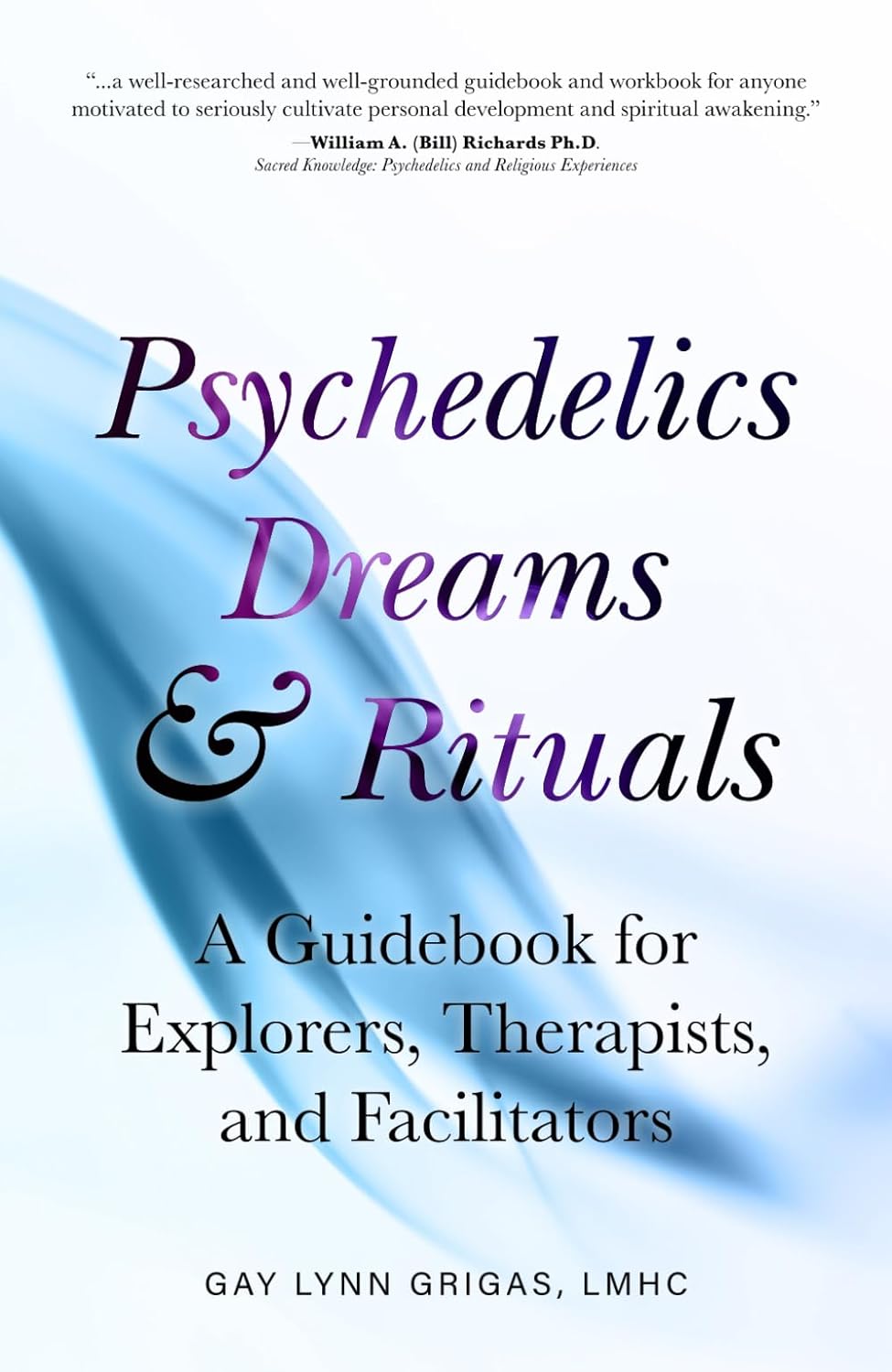
Psychedelics, Dreams and Rituals
Chapter One: Origin Stories
At sixteen, I decided to initiate myself.
Not into adulthood with a driver’s license or a first kiss—but into an illegal, invisible world where a single purple microdot of LSD could change everything.
I didn’t tell my parents. I didn’t tell my friends. I simply crossed the threshold.
It didn’t happen at a party, in someone’s basement, or under black lights. It happened in the middle of an ordinary school day—fluorescent lights, linoleum floors, teachers’ voices droning on. On the outside, I was just another student sitting at a desk. On the inside, an entirely different curriculum was about to begin.
I knew it was dangerous. I knew people got arrested, expelled, labeled “crazy.” I also knew something in me was starving—for meaning, for mystery, for proof that the world was bigger than the pain already swirling through my young life.
That day at school, I stepped into the unknown.
The classroom didn’t melt; it opened. Dimensions unfolded like hidden rooms in a building I’d walked through my whole life but never truly seen. Colors breathed. Time loosened. My mind became both mirror and doorway. Instead of losing myself, I met parts of me I didn’t know existed—an inner witness, a deep calm, a quiet, unmistakable knowing:
You are more than this body.
You are more than this story.
You are held by something larger than your fear.
While my classmates bent over worksheets, I was learning from an invisible teacher in a language my school could never teach. The bell rang, people shuffled to the next class, and I carried an entire universe in my nervous system.
It was dangerous. It was illegal. It was profoundly holy.
And here is the tension that shaped the next five decades of my life: I had enough maturity to navigate the experience, to journal it, and to take its lessons seriously. Then, just as quickly, I had to bury it.
I learned to lock that doorway and never speak of it in polite company. I became fluent in the language of “normal”: grades, jobs, credentials, church, therapy. I absorbed every warning about drugs and madness and ruin. I saw what happened to people who did not play by the rules.
So, I made a quiet promise to myself:
What happened that day will live in my journals,
not in my career,
not in my future.
I will not let this ruin my life.
For almost fifty years, that experience sat pressed like a wildflower between the pages of my youth. I built a professional identity that seemed to have nothing to do with psychedelics: Licensed Mental Health Counselor, Certified Addiction Professional, trauma therapist, minister, educator. Respectable. Responsible. In control.
If you had met me in those years, you would have seen a clinician who believed in science, structure, safety, and sobriety.
If you had asked my sixteen-year-old self whether she would one day use psychedelic medicine to help people heal from trauma, depression, addiction, grief, and existential distress, she would have laughed out loud.
If I had told her that she would someday sit with people in their sixties, seventies, and eighties as they used psychedelic-assisted therapy to make meaning of the last chapters of their lives, she would have said, “Now you are really hallucinating.”
And yet, that is exactly what happened.
The same doorway I crossed in that high school classroom did not stay closed. It reemerged—not as rebellion, but as medicine. Not as a secret, but as a therapeutic tool. Not in chaos, but in carefully held clinical and ceremonial settings where people could finally say, “I’m ready. I can’t carry this pain anymore. Help me see it differently.”
What changed was not the power of the medicine. What changed was our relationship to it.
When psychedelics came back into my professional world, it felt like a force circling the edges of my life had finally stepped forward and said: I’m here again. But this time, we are doing it with intention. With ethics. With community. With accountability.
It was exhilarating—and terrifying.
I was no longer a curious teenager. I was a seasoned therapist with a reputation, a private practice, colleagues, family, and friends who trusted me. I had spent years helping people recover from addiction and trauma. To step publicly into psychedelic-assisted work felt less like reinvention and more like placing my credibility, my relationships, and everything I had built on a fragile altar and lighting a match.
What if I lost my license?
What if colleagues dismissed me as reckless or fringe?
What if clients misunderstood?
What if family and friends thought I had abandoned everything I stood for?
And still, something deeper kept asking:
What if this is the missing piece?
What if that sixteen-year-old girl knew something you are only now ready to trust?
I didn’t rush in. I trained with scientists, psychiatrists, clergy, elders, facilitators, and fellow seekers. I learned protocols, ethics, pharmacology, and responsibility. I watched people move from despair to hope, from emotional numbness to feeling, from being trapped inside the jar of their trauma to finally seeing their lives from outside the glass.
Slowly, a pattern emerged—a triune pathway that kept revealing itself:
Psychedelic medicine.
Dreams.
Ritual.
Three doorways, one path.
Psychedelic sessions opened non-ordinary states and profound insight. Dreams carried the work forward, weaving symbols and messages into the nights and weeks that followed. Ritual created a container before, during, and after the experience, giving it meaning, form, and integration within community.
This triune pathway did not replace traditional therapy. It amplified it. It did not bypass science. It braided science together with soul.
Meanwhile, the world outside my office was cracking. Anxiety, depression, trauma, addiction, and existential despair were rising all around us. The people sitting across from me were not statistics. They were teachers, nurses, first responders, clergy, parents, grandparents, caregivers—asking the same haunting questions:
Is this all there is?
Is there any way out of this?
We needed more than symptom management. We needed a recalibration—a way to step outside the jar of trauma, look back with new eyes, and remember who we are beyond labels, diagnoses, and survival strategies.
That is where this book begins—not with abstract theory, but with danger, curiosity, and a sixteen-year-old girl in a classroom no one knew was becoming the threshold to the rest of her life. It begins with the tension between fear and fascination, legality and truth, safety and calling.
And it is not just my story.
These pages are an invitation for you, too.
Maybe you have never touched a psychedelic medicine.
Maybe you have, and no one knows.
Maybe your non-ordinary states have come through grief, illness, meditation, birth, trauma, prayer, or the slow unraveling of certainty.
Maybe you are a therapist, healer, caregiver, seeker—or simply someone who has carried far too much for far too long and quietly wondered:
When is it my turn to heal?
As you read, I will not ask you to imitate my choices or adopt my beliefs. I will ask something more radical:
Stay curious.
Stay honest.
Stay in conversation with your own inner healer.
These pages will take you from that first illicit threshold at sixteen to carefully held therapeutic work with adults across the lifespan, including elders seeking healing, meaning, and peace in the final season of life. Along the way, you will meet dreams that refuse to let truth stay buried, rituals that turn chaos into meaning, and medicines that reveal both our deepest wounds and our most luminous possibilities.
The stakes remain high: licenses, reputations, relationships, identities on the line. The question echoes again and again:
Are we stepping into a dangerous delusion—or an evolution of healing we can no longer afford to ignore?
This book does not offer easy answers. It offers a map, a mirror, and a dare.
The dare is simple:
What if the doorway that changed everything at sixteen
is not just mine—but a doorway in you,
waiting to be approached with more wisdom,
more support,
and more love than you have ever had before?
Welcome to Psychedelics, Dreams and Rituals.
Let us step to the threshold carefully, courageously, and see what your inner healer has been waiting to show you.
The Red Books, the Purple Microdot, and the Teacher Who Didn’t Turn Me In
My origin story doesn’t start with a mushroom ceremony in the jungle. It begins in a Florida living room in 1968—with a thirteen-year-old girl, a stack of red leather books, and a father who quietly believed the mind was a portal to something bigger than ordinary life.
The books were small and mysterious, with raised gold lettering and a hand cradling the world on the cover. My dad called them “the red books,” but they were more than that. They were an inheritance. First my grandfather, then my father, and now me: third-generation keeper of Robert Collier’s Secret of the Ages—a metaphysical guide to Universal Mind disguised as a success manual.
Collier insisted that the mind is not a battery that runs out; it is a power plant that generates more energy the more you use it. He wrote about conscious mind, subconscious mind, and Universal Mind—three levels of intelligence working like an unseen triune system. I didn’t have that language yet, but I had the feeling: something vast and intelligent lived both within me and beyond me, and if I learned how to listen, I could tap it for healing, guidance, and transformation.
I taped affirmations from the red books to the back of my bedroom door:
“You can do anything.”
“You know the answer.”
“Open up the channels between your mind and Universal Mind.”
Every night before sleep, I read them like prayers. I was thirteen, turning my bedroom door into a tiny altar to the unseen. While my friends practiced cheerleading routines, I practiced entering non-ordinary states of consciousness with nothing more than a book, a chair, and my imagination.
Collier’s instructions were simple: saturate your mind with everything you know about a problem, relax so deeply you forget your body, hand the whole thing over to the Inner Healer, and trust that something wiser than your conscious mind is working on your behalf.
I didn’t know it then, but this was my first training in psychedelic integration—years before I ever swallowed a tiny purple microdot.
Three years later, at sixteen, the universe upped the ante.
By then, I had learned to talk to the Universal Mind, to ask for guidance and watch how dreams and synchronicities answered back. But adolescence is hungry, and books and affirmations were no longer enough. I wanted to feel the mystery, not just read about it.
On the morning of my sixteenth birthday, I did something reckless and sacred: I took LSD at school.
There were no black lights, no psychedelic posters. Just fluorescent bulbs, desks in rows, teachers at chalkboards, and one girl quietly dissolving walls between worlds.
I can still see myself in the bathroom mirror before first bell, staring at my reflection and thinking, Happy birthday. This is going to be an interesting day. I placed the tiny purple microdot on my tongue—a gift from a friend—and walked into the day like it was a rite of passage no one else knew was happening.
As the medicine came on, my ordinary classroom began to shimmer. I could see the emotional weather inside my classmates as clearly as the posters on the wall. The teacher’s voice stretched and folded over itself. Time puddled. My body felt like a costume I was wearing, not the sum total of who I was. The metaphysical ideas I’d met in the red books suddenly had texture, color, and weight.
I was not just reading about Universal Mind anymore. I was swimming in it.
Things escalated in the girls’ bathroom. No one had warned me about mirrors and LSD. I became hypnotized by my reflection, watching my face multiply and fracture into endless versions of myself—child, elder, stranger, cosmic being—like a living kaleidoscope. The mirror turned into a portal, and I stepped through.
I don’t know how long I was gone, but long enough for my English teacher, Mr. Sepos, to notice I hadn’t come back to class.
He sent another girl to fetch me. I, being sixteen and very high, told her cheerfully, “I’m tripping.” She ran straight to him. He sent me to the nurse.
In that moment, everything could have gone very badly.
The nurse could have called my mother. The school could have called the police. I could have been expelled, marked, and shoved into the “troubled kid” category that closes doors for years. Instead, something remarkable happened.
The nurse took one look at me, heard my half-true explanation about cramps, and handed me a hall pass back to class.
I walked down the hallway suspended between two realities: the buzzing hive of school and the vast inner universe that had just opened. Lockers and bell schedules on one side; swirling colors, telepathic empathy, and the unmistakable sense that I was not just this body on the other.
When I stepped back into English, Mr. Sepos looked up, assessing me with the kind of quiet curiosity only a good teacher has.
“You okay?” he asked.
“The nurse checked me out,” I said, borrowing her authority.
He neither called the principal nor lectured me. Instead, he did something that changed the trajectory of my life.
He turned my dangerous experiment into an assignment.
“You owe me,” he said later, when we spoke privately. “You’re writing for the yearbook. I want you to use that imagination of yours.”
That was it. No shaming. No expulsion. He gave me work, not punishment. He handed me a pen instead of a verdict.
Without realizing it, he became my first psychedelic integration facilitator.
He challenged me to turn what could have been a chaotic, secret, potentially traumatizing experience into story, meaning, and craft. He anchored my expanded consciousness in language. He invited me to make use of what I had seen instead of hiding from it.
I went home and wrote.
I wrote poems, pages of reflections, metaphysical musings sparked by Collier and supercharged by LSD. I wrote about doors and decisions and the strange new awareness that my life would be shaped not just by what happened to me, but by how I chose to interpret and respond.
One of those early poems ended with this line:
The doors I open can be closed only by me.
At sixteen, I didn’t fully understand how true that was. Today, as a therapist whose career rests on conscious choice, it feels like a prophecy I whispered to myself.
Years later, when I read Aldous Huxley’s The Doors of Perception, I recognized the terrain: the urge to transcend self-conscious selfhood as a principal appetite of the soul. I had tasted that appetite in a school bathroom, then spent decades learning how to honor it safely, ethically, and therapeutically.
In the psychedelic world, we talk a lot about set and setting—mindset and environment—as crucial ingredients in any journey. That first LSD trip had neither in the formal, ceremonial sense. What it had was something else vital: a foundation and a teacher.
The foundation was metaphysical: my red books, teenage experiments with visualization, and a sense of an Inner Healer and Universal Mind already at work inside me. I didn’t enter the medicine as a blank slate. I entered as someone who had been practicing inner work for years, even if I didn’t yet have the language for it.
The teacher was human: an English instructor who chose curiosity over condemnation, creativity over control. Instead of shutting down my experience, he offered me a container—a place to put it, shape it, and learn from it. In doing so, he modeled something I now consider essential to psychedelic-assisted therapy:
We do not punish expanded awareness.
We help people integrate it.
That day, the triune pathway quietly came online in my life, long before I had a name for it:
Psychedelics cracked open perception and revealed deeper truths.
Dreams and imagination continued the work, offering symbols and storylines.
Ritual and writing gave those experiences form—on the back of my bedroom door, in my journal, in a poem, and in the yearbook.
I was still a teenager, still reckless, still very much at risk in ways I didn’t fully grasp. But woven into the danger was something else: the sense that if I listened closely, wrote honestly, and honored what I was shown, this path could become more than a secret thrill. It could become a vocation.
Looking back now, I see that my origin story isn’t simply “girl takes acid, sees strange lights in a mirror, becomes therapist.” It is a story about how early encounters with non-ordinary states, metaphysical teachings, and good teachers shaped my lifelong commitment to integration—to turning wild, ineffable experiences into grounded, compassionate healing for real people with real lives.
So I ask you, as you read:
What was your origin story?
Who handed you your first red book, your first doorway, your first glimpse that reality might be larger than you were taught?
Who helped you integrate it—or who punished you for it?
The rest of this book will offer frameworks, tools, and stories for working with psychedelics, dreams, and rituals in ways that honor safety, ethics, and community. But it all begins here: with a thirteen-year-old metaphysician, a sixteen-year-old psychonaut, and an English teacher who chose to ask, “What can you make of this?” instead of “What is wrong with you?”
In a world where many young people are still punished for their initiations, my hope is that this origin story invites you to see your own differently—and to consider that the most dangerous thing may not be crossing thresholds into mystery, but crossing them alone and without a guide.
You deserve better.
Your story deserves meaning.
And your inner healer—like mine at thirteen, at sixteen, and now—deserves a framework that lets it lead the way.


Comments
The manuscript explores a…
The manuscript explores a great topic with strong potential to connect with readers. A round of polishing would help refine the writing, improve the flow, and make the overall reading experience stronger.
I reworked the beginning, please read...
In reply to The manuscript explores a… by Falguni Jain
Yes, it was too slow getting into the topic and needed more of a story to open. Please give me your feedback with this revised opening, thank you so much! Gay Lynn
A rather niche topic I would…
A rather niche topic I would have thought. Interesting but I would have liked to have been offered more than just an explanatory preview of what to expect. At least one case study would have made this excerpt more accessible.
New Preview
In reply to A rather niche topic I would… by Stewart Carry
Hi Stewart, I totally agree, and I used my own story to draw the reader into the topic. More story and less overview. Please see what you think? Much appreciated! Gay Lynn
It sounds like it would be…
It sounds like it would be an interesti g read, but there was quite a bit of repetitiveness that made the excerpt feel...slow, I think. A good edit could help that.
Refined and Updated!
In reply to It sounds like it would be… by Jennifer Rarden
Hi Jennifer, I totally agree and I took far too long to get into the topic and the editing was needed. Please let me know your thoughts if you have a chance to review again, thank you so much! Gay Lynn