

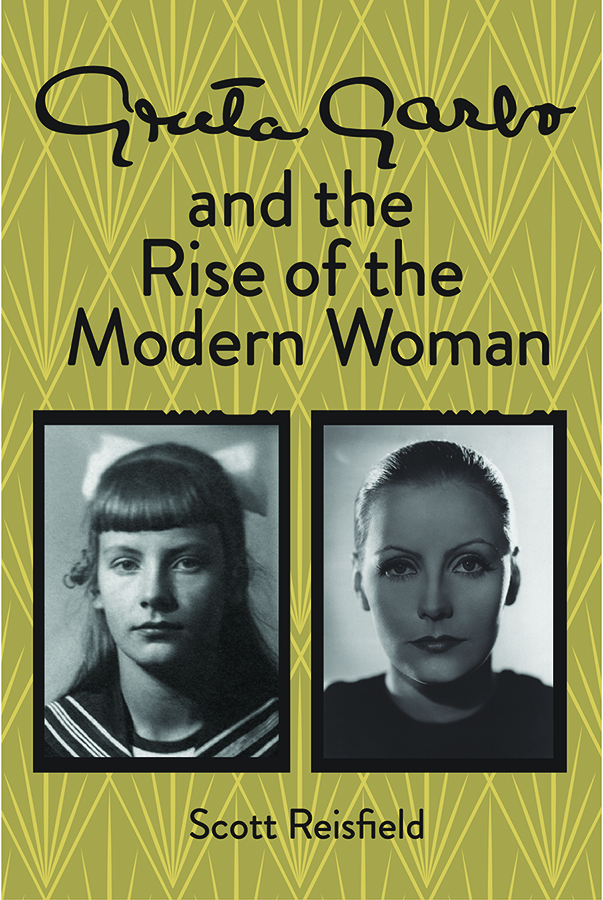
Introduction
The cinema has given precisely one great artist to the world, Greta Garbo. Unless you also count that damn mouse.
Louis B. Mayer, president, MGM Studios
Comes the hour, comes the woman.
In the early 1970s Garbo and my mother traveled to the Coco Point Lodge on the island of Barbuda for the first time. It was an upscale island resort. Coco Point had a dinner dress code of formal wear for women. As they readied to dine their first night my mother realized that Garbo was dressed in pants and asked if that was what she planned to wear. Garbo responded, “Yes, these should do.”
The resort was already buzzing with the news of Garbo’s arrival. When they entered the dining room, all eyes turned to her. Every woman there wondered: Would she be turned away for violating the dress code? She wasn’t. The next evening, half the women wore pants. My mom related that Garbo was quietly pleased. Another social restriction for women removed.
Greta Garbo was my great-aunt. To write this book I have taken what I knew of her, letters and information from my family and new research, to create a fuller portrait of this remarkable person. After her death I read what other people wrote about her. The picture didn’t match the person. Nothing captured her essence. I didn’t initially plan to do so, yet I spent years assembling Garbo’s story. I have stripped away incorrect information that muddied the picture.
Greta Garbo was a highly trained stage actor who transitioned to films early in her career. She worked hard to get into the best theater school and made two remarkable films in Europe before coming to Hollywood. She had immense natural talent and her training was in a naturalistic style of acting. In Hollywood she would transform, well, almost everything.
She was brought to Hollywood to be a star—though I don’t think Louis B. Mayer and Irving Thalberg, who ran the MGM studio, quite expected GARBO. By the age of twenty-one, three films into her American career, she was arguably the best actor in the world. The naturalistic style she used would take over Hollywood.
Garbo was able to use her acting skill to paint relatable women on the screen in film after film. Her audience tried to be like her or fell in love with her. She was only considered beautiful because beauty bent toward her. Before her stardom the public preferred smaller-boned, delicate women like Lillian Gish.
From the moment they first saw her on-screen, her Hollywood peers stood in awe of what she was doing. Lionel Barrymore, a co-star in four films, wrote, “She had the true nimbus of greatness.” His brother John Barrymore told a reporter, “The physical power she expends in her work is amazing.” Bette Davis would tell writer Whitney Stone, “Her instinct, her mastery over the machine, was pure witchcraft. I cannot analyze this woman’s acting. I only know that no one else so effectively worked in front of a camera.”
Where other stars took years to build their careers, Garbo achieved stardom from her first film. Women—Garbo’s fan base was mainly urban women—thought they could read her thoughts on the screen due to her acting ability. The intensity of fan attachment to Garbo and how she represented to them the various modern ways a woman might live her life are hard to appreciate today.
Once it was clear in late 1926 that Garbo was a star, she entered into a months-long contract standoff with MGM. She was just turning twenty-one. MGM blinked first.
Fans believed in the characters Garbo portrayed. For example, in 1930, one year into her near-decade-long total dominance of fan attention, Garbo received 3,000 fan letters per day, dwarfing the 800 letters President Hoover received, many of which only needed to be forwarded to the correct government department. If it took someone five minutes to handle and respond to each Garbo letter, it would require a staff of thirty-two to manage the multitude of letters arriving daily. Eleanor Roosevelt would report that she received 300,000 pieces of mail in 1933, which was 821 per day.
Her message was also timely, arriving as women were trying to sort out exactly what their new social freedoms were. With her characters Garbo destroyed the Victorian conception of women whose worth was based on their chastity. The audience believed in the imperfect women she portrayed and the underlying humanity Garbo displayed. The requirement for virginity and sexual innocence is stripped from the Modern Woman.
By the age of twenty-five she had transformed society. Women dressed like her characters, and they wanted to live like her characters lived. Women bought millions of dollars of clothing and furnishings derived from her film’s costumes and sets. Her presence on-screen and in magazines, and what people perceived as her private persona, were forces for social change. They resonated with women in a wide variety of phases in their lives, on issues beyond just their hair, clothes, and eyebrows. Women used Garbo to redefine what a woman was in an early proto-feminist way.
Restored to her rightful place, Garbo is revealed as a towering figure in the first half of the twentieth century. Garbo has been hidden by forty intervening years of social conservatism that rejected the Modern Woman.
Almost unrecognized was how Garbo transformed the way people created portraits. She acted for the camera; she didn’t merely pose. While elements of this evolution existed before Garbo worked with Arnold Genthe in New York, their 1925 sessions are the marker of this transformation.
The closest modern parallel to Garbo’s remarkable cultural impact on women would be Taylor Swift, though comparison is difficult because the mechanisms of fan engagement have transformed.
Was it just by acting that Garbo changed the world? The simple answer is yes. The more complex answer is that she changed all acting in Hollywood and made it have more impact regardless of the actor. The public perception of her, both in and out of character, goes beyond her work in film, though it springs from it. Finally, she consciously made feminist choices when she earned control.
In 1932 Garbo became independent, free to sign with any studio. Garbo only made one film with this independence before censorship began to transform Hollywood, constraining how women could be portrayed on the screen. That film was Queen Christina (1933). Garbo delivered an independent woman, a queen. The film transgressed on many levels. Garbo agreed to include a lesbian kiss, and her lover initially, and acceptingly, thinks he is aroused by a man, as the queen is in male disguise. The queen makes many nontraditional choices. This led directly to the creation of the Production Code Administration, the office that would provide a steel backbone to the social conservatives’ drive for censorship. Her late career is a rear-guard action against social conservatives.
Working by project, Garbo would only make seven independent films over nine years. Within this period Garbo made choices with intent. One will see how she was more the architect of her career than she is often credited with being. Garbo intentionally chose film roles that caused censorship challenges. She and Irving Thalberg cleverly used three costume dramas to turn censorship against itself. Then Garbo pivoted to comedy. Ninotchka (1939) wasn’t just funny. It was sophisticated, lampooning Stalinism with a deft touch.
In 1941 Garbo’s final film was inexplicably condemned and then censored. The script had been pre-approved and the film was not particularly bawdy. At the time it didn’t seem to mark the end of her career.
Over the next fifteen years there are seven projects she clearly agreed to make; one can find the written agreements for four of them. Of her unrealized projects, several clearly were intended to push the boundaries of censorship, though we don’t have the scripts to understand how the difficult issues were to be addressed. Garbo never backed down from her desire to portray interesting women.
Garbo registered with the audience as a complete, complex woman who held many thoughts and emotions in her mind. A Modern Woman. She resonated with the audience both in the roles she portrayed and in the person the audience believed was behind those roles. While she did not plan to have this effect on society, she pushed it forward throughout her career.
I travel for work and over the past twenty-five years I would add an extra day to a trip and visit an archive. I slowly assembled these resources, both learning important facts about Garbo’s life and raising new questions. Using translations, I was able to add resources from Sweden and Germany. I had the family letters my grandmother had given to me translated. I was stunned by what I eventually figured out. Garbo’s story had been lost. While several biographers have found important information about her life, they also were led astray by a sea of misinformation. Many of these fake stories take away Garbo’s agency. Others present her as a changeling, talented but detached from the world. They are clear in presenting Garbo as someone with savant syndrome whose success had nothing to do with her intelligence, skill, or effort. One recent biographer actually wrote of Garbo as “a Swedish peasant girl, uneducated, naïve and always on her guard.”
This book reveals Garbo and all her power. She was a key touchstone for two generations of women, an impact she achieved because of her talent, belief in the emancipation of women, and hard work.
Then there is the question of what it means to have what seems like half the world decide that you represent them. Garbo, she didn’t need a first name. The woman she represented to her audience was Modern. A woman who was both feminine and assertive. This was not without personal consequences for Garbo. Men pursued her with romance in mind, even men she had never met. One bequeathed her his small house.
Reading this, those of you who have read other Garbo stories might be thinking, “That’s not what I recall about Greta Garbo at all.” And you would be right. The understanding of her impact on the lives of women has been forgotten. Today Garbo has often been reduced to a meme about reclusiveness. As you will see, the characterization is not particularly accurate.
The conventional evolution of the Garbo history has been something akin to a ball that rolls down a hill gathering things that stick to it. A modern parallel is Ingrid Schorr’s story of what it has been like to be the “Rockville Girl” from the R.E.M. song “(Don’t Go Back To) Rockville.” Schorr recalls how every new biography of R.E.M. or interview with someone who lived in the Athens-Clarke County area in the last quarter of the twentieth century accreted new “facts” to the story of Rockville Girl. For example, Schorr was surprised to learn that instead of being a lyrical invention about her return home to trendy, tech-savvy, and factory-free Rockville, Maryland, she actually had returned to a mythic Rockville with factories. Life there was miserably blue collar. Once added to a biography, it becomes part of the canon the next biography is built upon. People will tell her directly, and she can read about, an entire alternative life she never lived.
While there are other women who may have had as much impact on how women fit into society in the first half of the twentieth century, they can be counted on one hand, perhaps two. Hopefully I deliver a more complete synthesis of Garbo’s life and importance that puts her impact on art, culture, and society in context.
Many histories of Greta Garbo have already been written. Her real life was more interesting. The hour came. Garbo was there. This is the story.
Chapter 1—Growing Up
There were several of us children who used to visit the Salvation Army on the South Island of Stockholm—that’s where I did my first performing and singing. This led to my being invited to sell Stridsropet. It worked to some extent in the building we lived in, but I was never any great shakes as a newspaper-seller.
Greta Garbo
The reporter could see that the woman was overcome with emotion. That seemed reason enough to talk to her. So he did. The woman, Gullan Johansson, had come to watch the internment of her childhood friend’s ashes. She entered into an easy conversation with the reporter, who had come to cover the event for his magazine. Greta Garbo was being laid to rest. Though the event was being televised live nationally, Gullan wanted to be there.
He asked the question reporters had been asking about Greta Garbo for eighty years: What was she like?
Gullan went on to describe her childhood friend and their shared backgrounds.
“We used to play store with rocks just to entertain ourselves,” she began. “We didn’t have any fancy toys. The only thing that separated our inner courtyards was a row of outhouses. We used to climb up on top of them and stand there talking.
“But Garbo was the leader! She was bossing the other kids around. At times we dressed up, or rather, made spectacles out of ourselves, and we played theater. She was more forward than the rest of us. She was adventurous. Once she went to Uppsala. No one knew where she was.”
She related that the two friends started working at barbershops. Greta at Götgatan and Gullan at Åsögatan. “The task we had was to lather up men before they got shaved.”
***
They had met around age five. As teenagers they drifted apart. Different lives, different friends. Gullan was now ninety-four, the last of the girls from the old Söder neighborhood. The bonds of their old friendship stretched over the intervening years, and she had come to Skogskyrkogården (Forest Cemetery) on this beautiful day in June 1999.
The reporter went up to Garbo’s niece after the ceremony and informed her that Gullan was outside. Introductions were quickly made. To his disappointment, they stepped away to talk privately. The two chatted in Swedish for twenty minutes or so. Then Gullan went home. There was no one else left from her childhood or working life to add to their reminiscences.
What has emerged from the stories told over the years by her childhood friends was a portrait of a tall girl who was serious, bossy, kind, playful, and so intelligent she hardly had to study to get by in school. She liked playing at theatre from a young age, and grew to dream of being an actor. Before she was twenty, and with the encouragement of Mauritz Stiller, her dream changed. Now it was to be the greatest actor.
Garbo’s childhood was framed out by the Sweden of her youth. It both constrained her options and gave her opportunities that had not existed for young Swedish women a generation earlier. During her childhood women gained suffrage, and economic opportunities began to expand both for women and working-class Swedes as the country rapidly industrialized. The other natural variable was her family, warm and supportive. They would be a fixture in her entire life. To properly see the young Garbo, one must focus in on what she herself would say about it, while stripping out the fanciful stories that were created about her.
The period from about 1850 through the start of World War I was a time of great demographic and social upheaval in Sweden. Birth rates increased and infant mortality rates decreased in the second half of the nineteenth century. The once mainly agrarian population was transformed, either moving to the city looking for work in the new industries being created or emigrating. In conjunction with the greater economic opportunity in the city, social unrest related to class structure developed.
Due to the country’s wealth in hydro power, iron, and forests, Sweden’s GDP doubled between 1880 and 1905. Whereas 30 percent of Swedes lived in towns or cities in 1900, that percentage grew to 45 percent by 1920. The population of Stockholm more than doubled from 168,000 in 1880 to 342,000 in 1910. In moving to Stockholm in the 1890s, Karl and Anna Gustafson had been on the leading edge of Swedish urbanization.
The combination of dislocation and economic change led to a twinned political and national transformation that was notionally tied to the turn of the century in the minds of Swedes.
Swedes termed this combination of social, economic, and political changes that their society went through sekelskifte (the turn of the century). No longer was top-down social control acceptable to large segments of the population. All kinds of movements shaped Swedish society. New organizations represented many groups, including professions, industries, and neighborhoods. The Free Church movement rejected the official state church. The army demanded a say in who its officers were. Women organized social groups within and across class lines without deferring to men.
The very notion of what it meant to be “Swedish” was crystalized in the Swedish National Romantic movement. National Romanticism in Sweden tied the rural past (or a somewhat mythical version of it) to the modern through a shared sense of a Swedish character and community. The Romantic movement in Sweden was liberal in character. In addition to the economic forces that in part drove this creation of a new national identity, several events occurred to reinforce the process. In 1905, Norway peacefully seceded from Sweden to become an independent country. While the separation ended up being nonviolent, it was contentious and led to a resurgence of Swedish nationalism. The adoption of Sweden’s national anthem that year was not a coincidence.
The Romantic movement would directly inform the theatre and film of Sweden. The story-telling Swedish films with which Mauritz Stiller and Victor Sjöström redefined the art of film in the late 1910s were National Romantic films.


Comments
No matter how interesting…
No matter how interesting some of this might be, it comes across as snippets of background information instead of a cohesive unit of biography in which we ought to have been provided with a lead-in to Garbo's life. I'm wondering if there is enough accessible material available to give it the plausibility it needs to be a compelling read?
Unfortunately, I agree that…
Unfortunately, I agree that it reads more as pieces of different stories put together into one document. I know this is only the first 10 pages, but after all these little bits of information, it leads me to wonder what is filling out the rest of the book. Also, after a while, calling her Garbo starts to feel impersonal and repetitive. Maybe switch it up so it's Greta instead?
The submission is thoroughly…
The submission is thoroughly researched and written with confidence. A stronger narrative hook and tighter flow would make the opening more immediately engaging for readers.