

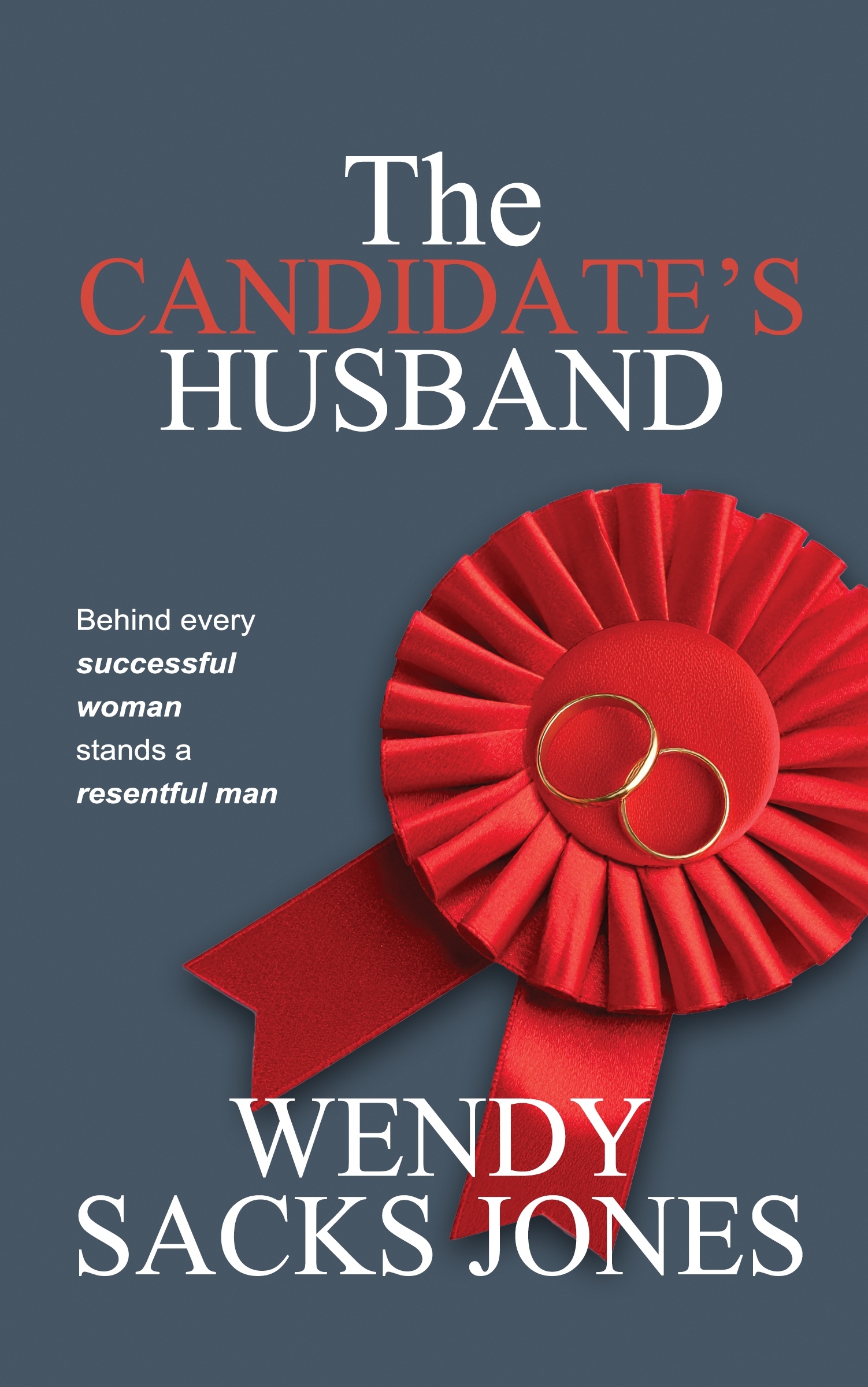
Friday 13 April 2018
I remember something you once said. Men should be
banned from politics, it would save a lot of trouble if they
were. That’s more or less how you put it. Keep men out
of politics, leave it all to women. It was a joke of sorts, a
late-night joke as I opened a second bottle of wine and
you continued to unpick the world’s problems. Men
don’t think things through, you said. They’re impetuous,
programmed by their hormones, prisoners of their sex.
They make bad decisions, for themselves and for the
other half of the population. First World War to Iraq,
there’s always a pattern – men screw up and the world
would be a better place if they didn’t run it. I laughed and
refilled your glass. Here’s to you, Kirsty. Another of your
dazzling ideas.
That was years ago, of course, just the two of us at
the kitchen table in our old flat, the hypothesis exhausted
but you still blazing with righteousness. But it comes
back to me now as we sit, still the two of us, in another,
bigger kitchen, the press mob outside, baying for blood,
your blood, intent on maximising your shame. It’s early
morning, barely light, and the house creaks, stretching its
limbs at the end of a sleepless night. Your ebullience is
gone, your confidence now paper-thin. Don’t say I didn’t
warn you. Right at the beginning, I told you. Politics is a
rough business. Malicious. Threatening. Dangerous. And
there really are special tortures reserved for women. I
told you and you took no notice.
But there’s no point in dwelling on that. It’s time to
go. You put on your grey coat, unpin the rosette from the
lapel and give me a watery smile. The front doorbell
rings. There’s been a short lull. Now it’s starting again,
and the bell is followed by a knock on the window.
They’re out there in strength, interest in the story
fortified by the absence of any firm rebuttal.
‘Right,’ I say. ‘We go straight to the car. Don’t look at
the cameras. Don’t say anything – “good morning”, if
you like, nothing else. And whatever you do, don’t have a
go at them. Ready?’
‘Ready,’ you reply.
I open the door and step out ahead of you. It’s trying
to rain. The press pack seems momentarily caught off its
guard. Reporters and photographers are idling on the
pavement, on our drive, talking to each other. Perhaps
we’ll make it to the car unnoticed. But a voice calls out
‘Kirsty’, there’s a flash of cameras and microphones are
thrust in your direction.
The worst day in your life is underway.
Part One
A Vacancy
Tuesday 20 February 2018
It all started, obliquely, with sex. I guess everything in life
starts with sex and some things end there, too. It was
Tuesday evening, I was working late and someone had
been hammering nails into my right temple most of the
day. I wanted to go home, but a blank document sat open
on my screen, demanding my attention. All I had to
produce was a short editorial, five-hundred lawyer-proof
words with which to hold to account an errant politician
– male, naturally, one of those who in that ideal world of
Kirsty’s wouldn’t exist.
A local MP stands accused… It was a start. A local MP
stands accused of sexual impropriety. It should have been
straightforward, except editorials like this never are. The
real story has to be tucked between the lines. I pressed
on, my fingers playing the keyboard, the thoughts
working themselves into phrases, the phrases merging
into sentences, an argument in there somewhere.
Earlier that evening, my boss had called me in to talk
things through. His office was a large corner cell, two
sides glass, looking out onto the newsroom. It was just
the two of us: him, Clive Pascoe, managing editor of The
Humberside Citizen, and me, Rick Dewhirst, his deputy, the
underappreciated workhorse who made sure we
produced a paper every day. It must have been nudging
freezing point in the Hull night outside, but here, in
Clive’s greenhouse of an office, we were locked in our
own micro-climate. He stood glaring at me, a single bead
of sweat making its way down his forehead and
disappearing under the rim of his glasses.
‘For fuck’s sake, the accusations are… well, who the
hell are these women? No names. It’s dodgy.’
I was leaning against the wall next to a framed,
yellowing certificate, Regional Newspaper of the Year, Highly
Commended, 1987. Once upon a time, this had been a
paper going places. But that was long before I arrived,
long before Kirsty forced us to move to Hull. The frame
was slightly askew. I resisted the urge to straighten it. Our
conversation was about to change down into a lower, deeper,
uglier gear.
‘You know what this is, don’t you?’ A finger jabbed
the air in my direction. ‘It’s a witch hunt. Except the
witches aren’t the ones being hunted.’
He nodded with satisfaction, as if the words exposed
an evident truth.
‘Another decent man doing an important job, and
they go for him. It’s a conspiracy. Poor sod doesn’t stand
a chance.’
He left a pause to allow this further batch of truths
to sink in. Somewhere in the world outside a police siren
whined.
‘And what’s he done? An appreciative pat on the
backside, I bet you, a compliment whispered in the ear,
nothing more. I mean, we’ve all done it, haven’t we?’
No, Clive, we haven’t. We don’t all behave like that.
But it wasn’t worth the breath. Let him simply run
out of steam. Kirsty would get that. Don’t dignify his
rubbish with a response, she’d say, stick to the moral high
ground. I said nothing and stared through the glass at
the empty desks in the newsroom as he bleated on. The
place always looked dismal at night. There was something
about it when it was unoccupied, when human activity no
longer disguised its essential shabbiness. It badly needed
redecoration and refurbishment, but redecoration and
refurbishment weren’t part of the management’s business
plan. The grimy cream walls were crying out for a lick of
paint, the cheap nineties desks and chairs were hanging
in, just, and the thin beige – or was it grey? – carpet had
absorbed all manner of unguents over the years and long
since given up hope of ever being cleaned.
I turned back. He was now pacing round his office.
‘Don’t get me wrong, I’ve got a lot of respect for
women. But let’s face it, what’s happening now is crazy.
One move they object to and you’re on the sex
offenders’ register, your career in ruins, your life well and
truly fucked.’
Like the newsroom, Clive sometimes struggled in the
twenty-first century. He was a throwback to a former,
grubbier age. I unfolded my arms, wiped my cheek – his
last observation had been delivered with a light spray of
spittle – and pushed myself away from the wall.
‘Have you done, Clive?’
He wheeled around and looked fazed by my question.
‘Two simple points,’ I said. ‘Unwanted touching is
assault and no-one’s above the law. That’s all there is to
it.’
‘Pfft.’
The word, if it was a word, hung in the air like the
final splutter of a broken engine.
‘Can we get back to specifics?’ I said. ‘What
we’re dealing with here looks like being more than
patting a backside.’
The rumours about an unnamed ‘senior politician’
had been circulating for a week or so. They bobbed
around on social media, fragments of innuendo, wisps of
invention. The digital stratosphere is full of stuff like that,
pathetic allegations, personal point-scoring. It comes
from nowhere and fades into nothing. But these
messages had refused to evaporate. They became more
insistent, more explicit, less cryptic. It was obvious that
someone prominent was in deep shit.
From the outset I’d had a hunch who it was. Martin
Barraclough was the Shadow Home Secretary and MP
for North Humberside. Our local man. Someone we all
knew, someone who visited foodbanks and old people’s
homes, who presented prizes at Kirsty’s school, someone
who was in the paper all the time. And someone it was
easy to dislike. Barraclough was an arrogant so-and-so,
with an old-fashioned reputation as a ladies’ man – the
term now felt shot through with irony. Over the years,
various tales had done the rounds, but no-one had taken
them seriously, or perhaps had chosen not to. Not until
now.
I started to dig. If I was right, this had the makings of
a massive local story, even if its epicentre was
Westminster. I didn’t tell Clive – he and the MP were old
cronies, bastards both, cut from the same crude template.
Nor did I mention it to Kirsty. It seemed wiser not to.
She was a party member and knew people locally. I didn’t
want her alerting them. I needed to be cautious in my enquiries.
In the end however, those enquiries got me precisely
nowhere. The phone was slammed down on me, my calls
weren’t returned. I should have been down there, at
Westminster, putting myself about, in the Lobby, in
the bars, picking up the gossip, finding out who knew
what. Instead I was stuck in an obscure newspaper
office nearly two hundred miles north. No-one
was going to talk to The Humberside Citizen.
And so I had to just sit and watch it play out
elsewhere – another paper’s scoop, someone else’s byline.
That afternoon the website of a national tabloid with a
large circulation – and enough in the coffers to take risks
– had blazoned the headline, Barraclough faces sex attack
claims. I was vindicated. I was also bitterly envious.
The MP’s accusers were anonymous, two women
he’d worked with at Westminster apparently, although
the paper hinted there were others. On the face of it, the
published story seemed insubstantial, but if it had got
past their lawyers, then it must have been reasonably
solid. I’d failed to get the story and all I could do was
write a sanctimonious editorial.
But not even that, if Clive had his way.
‘It’s too risky, legally’ he said.
‘There’s a bigger risk in ignoring it. It’ll look as if we
haven’t got a clue what’s going on, we’re out of touch.
Or…’
I slowed down. I was about to deliver the decisive
blow.
‘Or worse, we’re in cahoots with Barraclough.’
I’d hit home and Clive’s face showed it. In my mind,
Kirsty was already congratulating me. You’ve done it,
Rick, you’ve got him. He took off his glasses and looked into
the middle distance. It was time to press my advantage.
‘We’ve asked him to respond,’ I said. ‘He hasn’t. So
we ask again – publicly.’
Clive turned towards me.
‘The Citizen calls on Martin Barraclough to break his
silence and speak out on the allegations. He owes it to his
constituents,’ he said slowly. ‘Is that it?’
‘Exactly.’
‘It’ll be thoroughly lawyered.’
‘Obviously.’
‘And I want to see it before it goes.’
‘Naturally.’
‘Well in that case, fuck off and get on with it.’
All this had taken about fifteen minutes, but it was
worth it. A necessary process. I went back to my desk in
the newsroom to savour my victory. And to bask in
Kirsty’s imminent approval. A small thing maybe, but
she’d be proud of me for holding my ground. I spent a
lot of time second-guessing my wife’s judgement. I carried
her around like a hidden barometer, although the mercury
could rocket off the scale and sometimes I miscalculated
the readings entirely. But this time I was confident.
Loyalty to her gender would surely trump loyalty to her party.
And she always said hang in there when you’re right.
I glanced over at Clive who was riffling through a pile
of papers on his desk. He was clearly still annoyed – with
me, with himself, with Barraclough for carelessly causing
the problem in the first place and almost certainly with
the whole of womankind. After a moment, he jumped
up, grabbed his coat and scarf and slammed his office
door.
‘We need to do something about the heating in this
place,’ he said and was gone.
An hour later, I was giving the editorial a final read
through. I was alone in the newsroom, apart from the
cleaner who was making unenthusiastic efforts to remove
the day’s detritus, collecting mugs, emptying bins and
occasionally flicking a feather duster over a keyboard. I
smiled at her across the room and she nodded back
without altering the slow rhythm of her work. It was
doubtful whether the feather duster served any purpose
at all.
My mind wandered back to Kirsty. She’d be
more than half-way through her meeting by now.
That night, as usual on the third Tuesday of the month,
she was hard at it with her governors, dealing with politics
of a different sort. I’d never been in one of her meetings,
but I could picture them. She and a dozen other
people would be seated around trestle tables sandwiched
together at the warmer end of the school hall. In front of
them were agenda papers stained with coffee mug rings,
littered with biscuit crumbs and decorated with doodles.
Eyes strayed towards the big wall clock as the evening
drew on, voices cut across each other in irritation and
every now and then someone stifled a yawn. And there
she was, my heroic wife, the one to whom they all looked
for explanations and justifications, a headteacher under
siege, phone switched off, isolated from the outside
world in a dark place of drifting GCSE results, struggling
recruitment, declining funds, social deprivation, and
hopelessness.
Of course, she didn’t see it as hopeless. She loved her
relentless job in a way that continued to astound me. Her
work was a cause, while mine was merely an honest trade.
I didn’t have a mission – thank Christ – and I wasn’t
going to save the world. I certainly wasn’t responsible for
eighteen hundred kids in one of the poorer parts of Hull.
I looked again at the final paragraphs on my screen
and wondered how she would read them.
Martin Barraclough has been found guilty
of nothing. The accusations against him are as
yet unsubstantiated. The allegations may be
wholly fabricated. Martin Barraclough may be
an innocent man, unjustly framed. But the
public needs to know what he has to say. People
have the right to hear from their MP. That is
how democracy functions.
It is up to the Labour Party to decide on
Martin Barraclough’s political future. But while
those decisions are being taken, we appeal to him
to end his silence. In the public interest, we offer
him the columns of this newspaper to speak to
his constituents.
She’d poke at the piece and pronounce it too bland.
Can’t you just tell the truth, she’d say. Here’s an
establishment figure who’s assaulted women, abused his
power and betrayed the trust of those who voted for him.
The big people screwing the little people and thinking
they can get away with it. Yes, Kirsty, that’s what I
should have written. It would have made a pithy editorial.
But that wasn’t how things worked. Barraclough was
as yet innocent. There were no charges, not even a
criminal investigation, it seemed. This was, out of
necessity, limp journalism. The fluorescent light
immediately above me hummed and flickered, as if
objecting to what I’d written. I’d had enough of Martin
Barraclough. If I hurried, I could still get home before
she did.
As I packed up to go, my phone buzzed several times
in quick succession. Barraclough resigns from front bench…
Labour leader accepts resignation ‘with sadness’… Statement
expected shortly… Police investigation underway.
‘Shit.’
The word travelled unchecked across the empty
newsroom. The cleaner, on her way out, caught my eye,
then looked away. So much for the editorial. I opened a
new document, ready to bang out a short news piece
instead. I’d barely started when Barraclough’s statement
came in. His resignation as Shadow Home Secretary
would take effect immediately. He denied any
wrongdoing but would offer the police every assistance
with their enquiries into the allegations against him.
There was a brief final sentence. In the
circumstances, he was also standing down as MP for
North Humberside.
I punched the air. A by-election. Hallelujah. We’d not
had a decent political story since Hull’s embrace of Brexit
and this, with its added components of sex and shame,
was even better. There was something deeply satisfying
about observing someone’s just humiliation.
Schadenfreude – a perfect word, and an emotion crucial
to journalism. I rarely wondered what it was like to be the
man – it was always a man – in the eye of the storm. The
feelings of panic, denial, self-loathing… who knew what
people went through when they were caught out? They
had only themselves to blame.
It was after eleven when I finally switched off the
office lights. Clive had rung a couple of times, fussing
about the wording of my news piece and threatening to
write a political obituary himself tomorrow. A requiem
for a dubious ex-friendship, more likely. I didn’t care. I
was going home.
My car was the only one left in the underground car
park. I switched on the ignition and the headlights picked
out the skid marks at the bottom of the ramp. I put my
foot down. Barraclough was an idiot and I wanted to
hear what Kirsty really had to say, something
enlightening, something I hadn’t thought of – about the
principle, not the tawdry details, of course.
But she’d also have more pressing things to share –
some new battle at school, no doubt. I was used to her priorities.


Comments
It's a great start with a…
It's a great start with a mandatory great hook and a premise that feels like it could have general appeal in today's world. The text and the style of writing create a kind of breathless momentum which I assume to be deliberate but should not be at the expense of the evolving narrative. There's a good story emerging here so don't rush it.
The story has a brilliant…
The story has a brilliant start that immediately draws the reader in. The writing is strong and confident, making the opening very engaging. Good work!
Great hook at the beginning,…
Great hook at the beginning, and then great narrative. Reading the logline and then the intro made me very, very curious!