
Introduction
Kalman
This is part of the strange generation of ours.
I call it “the mad generation of the great fire,” which, at the time, was most of Europe. Things happen out of the blue. Not just with us—other people have discovered a lost family member by pure chance. Somebody notices and says, “I know this lady. Her last name is such-and-such.” In my case, I’ve been looking for fifty-six years. All I have in my head is the name “Lipa.” We never formally introduced ourselves. I am Kalman and he was Lipa.
We spent six and a half months working together in the SS guard shack of Josef Mengele’s hospital camp in Auschwitz II-Birkenau. He saved me from beatings and looked out for me, but I knew very little about him. In January 1945 the Russian army overtook Birkenau, and we were free to go. Lipa and I parted without much ado—it’s like that in Birkenau. We just said goodbye without understanding it could be the last time we saw each other. This was how I parted from my grandfather on the train ramp. It was part of life. Lipa went that way, and I went this way.
Where’s Lipa today?
Nobody knows. Lipa was a nickname.
He’s someone else.
Wednesday, October 31, 2001: The 56-year search is over
The phone rings in the kitchen.
My wife answers it and calls out to me in the living room: “It’s your sister. There’s a program on channel 8 about the Mengele Twins.”
It’s 6:30 p.m. Tel Aviv time, and there’s a program on the National Geographic Channel called Leo’s Journey: The Story of the Mengele Twins. It’s detailed through the eyes of a “Leo Lowy.” What Mengele Twin wouldn’t want to stop and see this? I’m watching the show, and another yankel1 is making the rounds of Auschwitz with his family. This guy, Leo, is showing his family around, like I did with my twin boys. I’m impressed.
At twenty-one minutes and seventeen seconds into the film, there’s a picture of Leo and his twin sister, Miriam, as youths. I can’t believe my eyes. I shout at the television, “It’s Lipa!” The ball in my mind starts rolling at twenty-one minutes, seventeen-and-ahalf seconds. How could I know the old guy with glasses showing his family around was my Lipa? But there is no doubt. I know this face. “Hold it everybody, this is him! It’s Lipa!” I worked ten hours a day with him through the last weeks of June 1944, all of July, August, September, October, November, and into December. Just after Christmas, the SS guards stopped our work and told us to get out, our job was finished. That’s when Lipa and I parted. Shortly after, the evacuation began.
My wife calls out from the kitchen, “What are you talking about?”
I call back, “Come in here now!”
“What are you screaming about?” she asks.
A little annoyed, I respond, “Quickly, come here!”
The screen no longer shows the image of Lipa. I curse quietly in Hungarian as the film goes on. My wife comes in and says, “What’s the problem?” I tell her, “Sit here and wait.” At forty-four minutes and twenty-six seconds, as the film’s ending, they’re kind enough to show the same picture of Leo as a young boy. I point at the screen. “There! That’s Lipa.” To me, the producers are making it clear: the time has come for these two mice to meet again.
Prologue
Son of Leopold
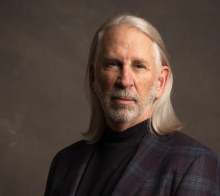
Imagine growing up and not realizing over fifty members of your family were murdered. My name is Richard. I am the third son of Jocy and Leo Lowy. At the time of writing, I’m sixty-six years young, retired, and living my best life strumming away on my guitar. Little did I know that my retirement would be spent delving into my father’s incredible story of surviving the Holocaust. As a child, I was aware of the numbers tattooed on his arm and the fact that he was a survivor, but the gravity of his experiences never truly hit me until I was in my late twenties. Despite my curiosity, my father remained tight-lipped about his past, and my mother warned us not to pry.
I had only scratched the surface of World War II in my high school history class, back in the days before Google. Research meant hours spent in the musty aisles of a public library, sifting through dusty bookshelves for information buried in massive, dry textbooks written by stuffy historians. As a young teenager, I was more interested in jamming with my band.
What I did know was that Father came from a faraway land in Eastern Europe, as did his friends. When he played golf with these friends “from the old country” I would trail behind, a silent observer in their world of heated debates and inside jokes. Their foreign accents added an air of intrigue to their conversations, making me feel like I was eavesdropping on a secret society. Despite the language barrier, their camaraderie was evident in the way they teased and challenged each other on the course. It was a glimpse into a world filled with mystery and laughter. As far as I knew, they were just a happy group of guys.
Growing up, I was surrounded by a colourful mix of “relatives” on Dad’s side. They spoke a variety of languages, including broken English, Yiddish, and Hungarian. Despite not being blood-related, my brothers and I affectionately referred to them as “uncle” or “auntie.” The only true aunt in the mix was Dad’s twin sister, Miriam. Alongside them were three cousins—Tova, Terri, and Yosef—who, like my father, were survivors of their own pasts. Despite the shared experiences, they all remained silent about their history.
As I matured, I uncovered the incredible truth that my father was not only a Holocaust survivor, but a survivor of a place called Auschwitz II-Birkenau. Soon after I learned he was a Mengele Twin—few people had ever heard these names, let alone spoken them. Dad’s past was so haunting that even talking about it in an interview brought on weeks of terrifying nightmares, leaving him drenched in sweat every morning. Mom, fearing the repercussions, warned him to keep silent on his past. When Leo tried to share his experiences, he found that others struggled to believe his unbelievable tale.
By delving deeper into the history of the Holocaust, my understanding of the atrocities committed at Auschwitz grew. While some may have been aware of the horrors, the silence of many survivors spoke volumes. The thought of a sinister doctor conducting cruel experiments on innocent twin children within the confines of a massive death camp seemed too surreal, like the plot of a chilling horror film. Nazi Germany’s most horrifying and monstrous creation, the largest extermination camp in history, was established on May 20, 1940, just outside the town of O!wiecim in Poland. This place of unspeakable horror, known by its German name, Auschwitz, would become synonymous with the darkest depths of insidious human cruelty and suffering.
Jewish communities were herded into cattle cars for transportation to Auschwitz. When they disembarked onto the camp’s train ramp, they were met with a chilling scene: SS officers casually selecting which prisoners to send to forced labour details, and which to subject to cruel experimentation by camp doctors.3 Most were not selected and sent directly to the gas chambers, hideous cells disguised as showers. The haunting words of the SS officers echoed in their ears, falsely reassuring them that these were just “disinfection measures” before they began their work in the camp.
The survivors of this horrific ordeal were branded with a serial number on their skin, a terrifying experience renaming them as mere numbers in a twisted system of oppression. They were cruelly segregated into sub-camps, each one a hellish prison within a prison. Women, men, and children, confined behind electrified barbed wire and watched over by sadistic SS guards who revelled in their power. The air was thick with fear and despair as the inmates clung to whatever shreds of dignity and humanity they had left in the face of this unspeakable cruelty.
In early 1943, Doctor Josef Rudolf Mengele was assigned to Auschwitz. Happy to be on the ramp making selections from the incoming prisoners, he relished his role of deciding who would die, and whom he would use for experiments, which involved numerous injections, painful life-threatening procedures, and unnecessary surgeries without anesthetic.
His main interest: twins and dwarfs.
Operating with a complete lack of compassion or empathy, he considered them nothing more than lab mice, his rationale being, “They are going to die anyway.” Many test subjects were exposed to unnecessary amputations, typhus infections, transfusions of diseased blood, castration, and X-rays. Some twins were simply murdered by phenol injection next to their siblings so their bodies could be dissected and compared at the same time.
This is what it meant to be a Mengele Twin.
In late 1999, my Auntie Miriam, Dad’s twin sister and his only living connection to the past, passed away. I approached Father with, “I want to know your story. I want to hear our family’s history.” Now that Miriam was gone, he agreed. He was showing early signs of dementia, so we had to make this happen quickly.
In the spring of 2000, our family—Mom; my two brothers, Gary and Stephen; and me—along with a seven-member film crew, set out to retrace
my father’s steps. Before embarking on the journey to film Leo’s past, he was diagnosed with low blood pressure. His doctors warned him not to travel but he
kept this from us, determined not to compromise the trip. For him, this was just another challenge. After all, he had already survived Auschwitz, Mengele’s brutal medical experiments, two heart attacks (each followed by a quadruple bypass), lung surgery, non-Hodgkin’s lymphoma, peripheral neuropathy, shingles that scarred his eye, a blood disorder, hernia surgery, and the removal of his spleen. Leo knew what it meant to endure, and he was ready to do it again.
Our first stop would be to his family home in Berehove, a town now in Subcarpathian Ukraine. Berehove has changed hands and names many times, but to Leo it was always Beregszász, the name he’d known as a boy. From there we followed his harrowing path to Auschwitz, the place where his family and 3600 others from their community were murdered. Leo and his twin sister Miriam had been “spared for reasons unknown,” as he would say, when Mengele selected them on the ramp. Over the course of our journey, under relentless heat, we worked through gruelling thirteen-hour days, packed into an old bus without air conditioning and staying in rundown hotels with no running water. Each stop brought a flood of painful memories, each step a reminder of what he had suffered—and survived. Leo, exhausted but resolute, shared his story in the hope that others would learn from it, aware of the risks but certain of the importance.
We returned to Vancouver on May 16, 2000, and the physical and emotional toll became immediately apparent. That very night, Leo’s strength ebbed away, as though he had fulfilled his life’s final purpose. My mother called 911. He was taken to Vancouver General Hospital, where he was placed on life support for heart failure. After a week in the Cardiac Care Unit, the doctors told us, “He’s not going to make it.” We made the difficult decision to remove him from life support. My mind drifted to Miriam and the thought they would soon be reunited.
On October 31, 2001, Leo’s Journey: The Story of the Mengele Twins aired on the National Geographic History Channel in Tel Aviv. When I went over to the house for a family dinner on November 17, Mom told me something unexpected: “Someone from Israel called a few weeks ago, and then sent an email. He said he knew Dad from Auschwitz. His name is Kalman.”
Kalman’s email was a revelation. Not only did he remember my father from the camp, but he declared in his email, “He is my hero. I’ve been looking for Leo all my life.” I had to know more.
I travelled to Tel Aviv to meet Kalman and hear his story, one that would soon feel like stepping into history itself. For a week he shared his memories with me, each day unravelling a rich narrative that stretched from his earliest years to life with his grandfathers, his time with Leo in the camps, and beyond Auschwitz. His voice was steady and heavy with detail, recounting each memory as though it had happened yesterday. He spoke slowly, often pausing to emphasize the smallest, most powerful details. He wanted me to understand fully the weight of each moment.
When I returned to Vancouver, daily work life consumed me and the hours of footage from Kalman and Leopold’s interviews lay untouched for eighteen years. It wasn’t until March 2020, when the COVID-19 pandemic forced the world into isolation, that I had time to sort through my media studio. There, in the quiet of lockdown, I rediscovered two massive hard drives and dozens of digital tapes—the interviews. I spent those long, isolated months transcribing more than twenty hours of testimonies, reliving their stories word by word.
Before I go any further, let me be absolutely clear: I did not write any of Kalman and Leopold’s testimony. What you will read is their own truth, transcribed from video interviews that can be authenticated by the original video archives held at the United States Holocaust Memorial Museum in Washington, D.C. My role was simply to organize and make sense of it all. I did not add to, nor did I remove, any part of their story. Kalman and Leo spoke of chance encounters, hidden reservoirs of resilience, and the bonds that held them together in the face of unimaginable horror. Kalman asked questions that have no simple answers: When you are certain of death, when hope is an illusion, how do you will yourself to survive? Can you keep your humanity intact?
The Nazis meticulously documented their atrocities, but they left no record of the humanity behind the barbed wire—the inner lives of the twins, their friendships, fears, daily routines, and the quiet acts of courage and kindness that persisted in the shadows. While some might know about Mengele’s experiments, few have heard the deeper stories of survival that extended beyond physical endurance.
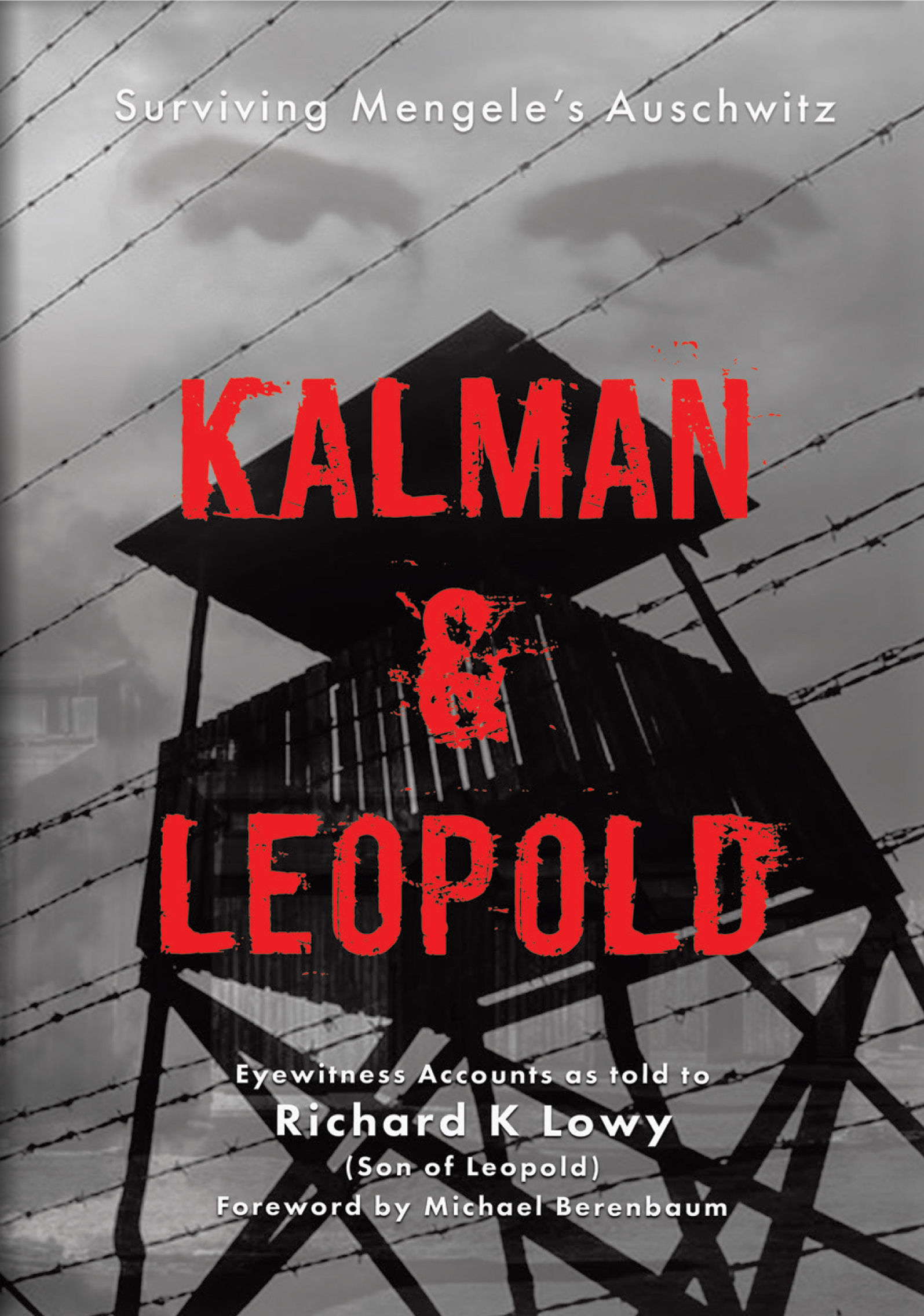
Their accounts lay bare the darkest depths to which humanity can descend and the astonishing resilience of the human spirit. Together, they stand as both a warning and a beacon from the past, calling out to us today: this is what happens when the world turns a blind eye to evil. This book preserves their voices, their stories, their firsthand testimonies—the legacy of Kalman and Leopold.
Leopold
Thursday, June 4, 1928: Born a twin
In the Jewish faith you must have a son to carry on the family name. You see, the son says a prayer on the date of each parent’s demise. When your father or mother passes, you mark the date in the calendar, and on this day the son goes to the synagogue and makes a special prayer. If the family doesn’t have a son this cannot take place, because in Jewish tradition the women cannot do this.
My parents have a son, Leib. He’s ten years older than me. A teacher reprimanded him for something he did in class. He may have not known an answer, or more probably was misbehaving, and the teacher hit him over the head with a cane. Leib ended up in a hospital and died about a week later. I never knew him. I’d not been born yet.
Based on Jewish tradition, my parents start trying to have another son. After four girls, there is still no male child. They’re not wealthy, and realize this means more mouths to feed. Regardless, they keep trying until I’m born. But another package comes along with me: a twin sister. I’m the only boy with five sisters. I’m spoiled. We were born in the backyard of our house on Monday, June 4, 1928, in Subcarpathia, Czechoslovakia, near the border of Hungary. We lived in a small city called Beregszász, a modest twenty-five-year-old house, with a small porch and a little outdoor summer kitchen. My father, Yitzchak Lowy, is forty-three years old, with a small goatee. He works hard to provide for our family.
We have a normal life as a nice close Jewish family of about fifty. There is my father, Yitzchak; my mother, Mariska; and five sisters, Berta, Sera, Leah, Roza, and my twin sister Elu—we call her Miriam. There’s my Zaida [Grandfather] Eliezer and Bubby [Grandmother] Reizil; Father’s brother, Uncle Pinchas, and his wife, Auntie Faige; and Dad’s sisters, Aunties Gitel, Rachel, Mirel and Sarah; and so many cousins, nieces, and nephews, all living around the same area.
Kalman
Saturday, May 31, 1930: Born a twin
I was born in a township called Ilok in Northern Yugoslavia, a jump away from the Hungarian border in a region that belonged to Hungary before the First World War. Ilok is in a wine-growing region and my father, Nandor Braun, is a wine merchant with my mother, Gisele Freilich. He calls her Tova, her Yiddish name. Father travels around buying complete crops or the first wine, selling to local communities and servicing the entire area.
We live by the Ipoly, a two-hundred-and-thirty-two-kilometre river which stands as the border between Hungary and Slovakia. We’re an Orthodox Jewish family from a Hungarian community. We exist on the lower side of the strictly Orthodox order. A proper Orthodox family is a father, mother, and seven or eight children. We are father, mother, and five children.


Comments
The manuscript opens with a…
The manuscript opens with a brilliant hook that immediately captures attention and sparks curiosity. The writing is intriguing and confident, creating a strong sense of momentum and leaving the reader eager to discover more.
Deeply moving and compelling…
Deeply moving and compelling at the same time. Truth will always come out sooner or later and the truth of what happened to these unfortunate people needs to be told and remembered, especially in today's world where social media has immunised us to the impact of human suffering.
A very dark moment in…
A very dark moment in history that seems to be repeating itself in our days. A story that needs to be told.
Extraordinary Hook
"It's Lipa!" — recognising a man on a National Geographic documentary after fifty-six years is an extraordinary hook, and the guard-shack vantage point is genuinely rare material. The scrupulous "I only organised it" note is admirable and also the risk: testimony this valuable still needs shaping, and the Prologue drifts into general history readers can find elsewhere.
Compelling Subject Matter
The subject matter is incredibly compelling! I want to learn more about Lipa and Kalman's story.