
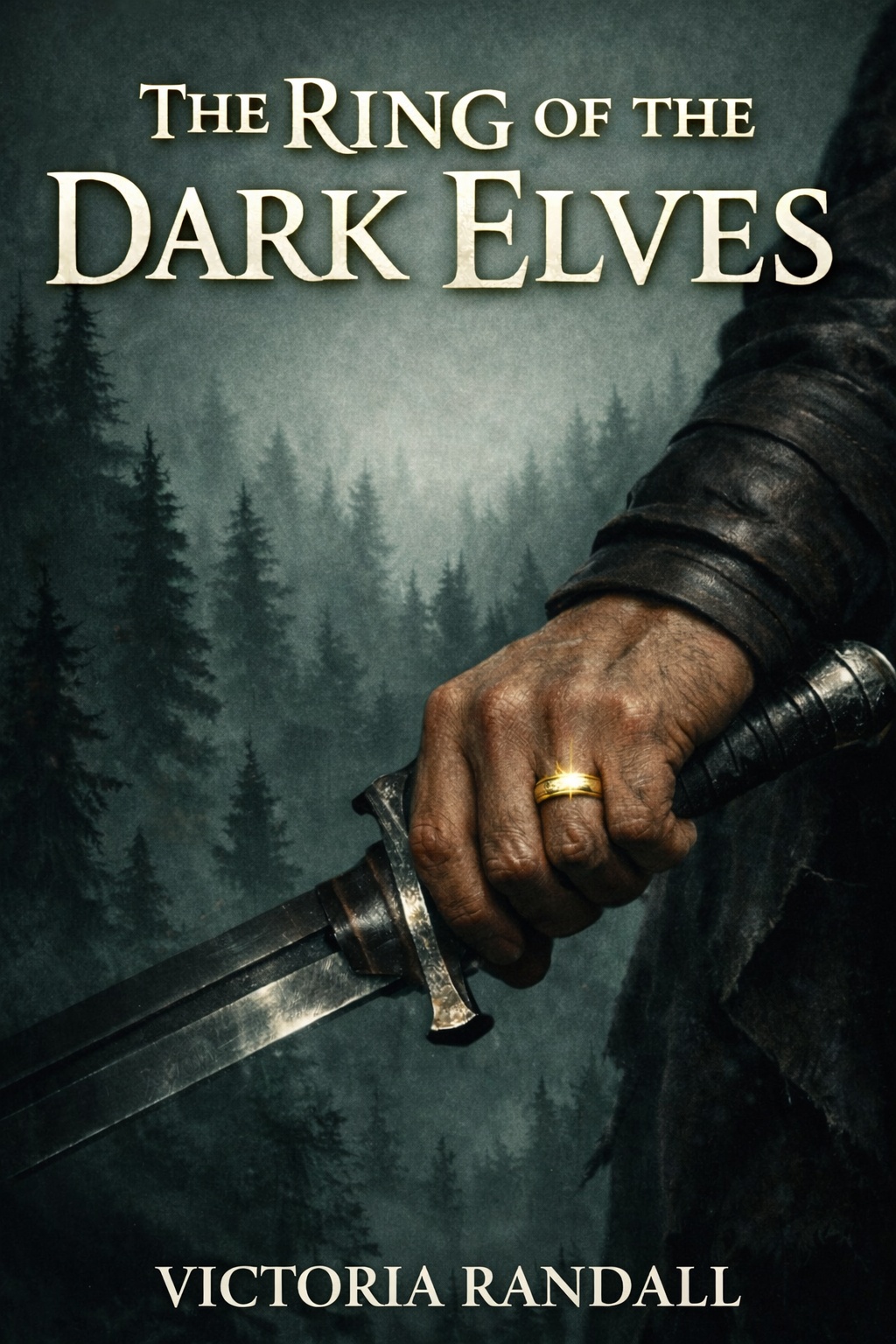
The Price of Wisdom
She sat beneath a root of the great tree, the World-Ash tree that is called Yggdrasil, whose highest branches rustle in the bright sun of Asgard where the Aesir dwell, but whose deepest root strikes down into Hel. The massive trunk soared above her, high above the clouds to where the four winds in the shape of four stags leap and frolic in its branches. When they shake their antlers, rain falls in Midgard, where mortal men live.
The old woman under the root did not look up. It was enough for her to know that the tree stood there, solid and massive, supporting the worlds, with runes of truth and justice carved as deep as a spear is long into its trunk. She gazed instead at the spring at her feet, whose clear water lay blue and placid and deep. On its far side two swans floated, each breast to breast with its reflected image. When they sing, their music can at times be heard in Asgard, but they were silent now in the golden light of the waning afternoon.
The spring was the Well of Wisdom, far to the north of Midgard in the cold wastes of Jotunheim, and the woman sitting beside it wrapped in an old brown cloak was its guardian, Urda the earthmother. She was wise, and she was aware of certain events of the future, for she had drunk often from the well she guarded. This evening she sat waiting in calm expectancy, gazing into the water as the evening breeze ruffled it. She was expecting someone, for she had seen his approach in her morning’s draught from the well, but she was not impatient. She waited tranquilly, while the swans circled on the water and the shadows lengthened.
At length, as the sun was sinking into the sea of blood-red clouds in the west, she heard a footstep on the mountain path. A man came into sight, toiling up the steep mountainside with an ash spear used as a staff, a cloak the color of a rain cloud wrapped around him and a sky-blue hood drawn over his head. She did not need to see his face to know who he was, for his massive shoulders, his firm heavy tread, and the strength of the hand that gripped the spear were unmistakable. She smiled at sight of him, a little in pity, a little in affection; but then she composed her features and waited with bent head, studying the water.
The traveler halted at the crest of the path and stood a moment, breathing hard after his strenuous climb. When he drew near her, she looked up, her face placid under the brown braided hair streaked with silver.
“What do you wish here?” she asked.
“I have come to drink from the well.”
She knit her brows. “There is a price to pay for a drink from this well.”
“So I have heard.”
“It is a high price, traveler.”
“I have need of wisdom,” he said brusquely.
“A wise man’s heart is seldom glad,” she replied. “Or so I have heard it said. In moderate wisdom lies happiness.”
“I wish to know the future. I bear a great burden, and I need all the wisdom I can win.”
Her face softened suddenly, acknowledging that she recognized him. “You have suffered enough already in your search. It is well known that for nine nights you hung in the tree in the wind and rain, yourself offered to yourself in sacrifice, to gain knowledge of the runes. Was not this enough?”
He threw back the hood with a rueful smile. “I see that you are not easily deceived, Urda. Yes, I suffered once, when I was younger. But the years draw on, and the days of wrath and doom draw near. The fates of men and the Aesir lie heavy on my shoulders, and I seek where I can for wisdom to alleviate my burden.”
She sighed, looking at his rugged face, burnt brown with the wind and sun of his travels, his gray hair and beard, and the piercing blue of his eyes. His gaze was keen and youthful, belying his great age. For a moment, as he leaned on his staff gazing quizzically at her, the years rolled away and he seemed young again, and she a maiden. She felt a sudden tenderness for him, despite the time and the chances that had come between them. Once she had borne him a child; a woman does not forget that easily. But even that child, the warrior maid Brynhild, could not help him now if his mind was set.
She shook her head. “I would not see you pay so heavy a price.”
“It is my choice. I wish to know more of Ragnarok, of the last battle. It may be that by some means I can postpone it. That is my task, and I must fulfill it whatever the cost.”
“I see.” She bent her head again, looking into the water of the well, now growing dark with the shadows of evening. “The price is your right eye,” she said softly.
He was silent. He had known it would be high, but that was very high. Still, if it brought him wisdom, knowledge that he could use to combat the Frost giants and the Mountain giants who sought to destroy the city of the Aesir . . . Such knowledge was worth any price. “I will pay it,” he said.
She made as if to speak, then closed her lips and leaning to her right, took a horn from a bush where it hung. She dipped it into the well and held it up dripping to him.
He took the horn. The water dripped from his fingers like jewels of fire in the ruddy sunset light. He hesitated, then threw back his head and drained it in one long draught.
The water was cold and fragrant with the scent of grasses, the scent of the earth. His throat was parched after his long climb; as he drank, he forgot his high purpose for the moment and thought only of quenching his thirst. Then he lowered the horn. For a moment he stood motionless. Nothing happened, and he was about to fling it down in disappointment when suddenly he stiffened. A sudden blinding vision of the future invaded his mind.
The golden cock crowing the morning, waking those who would soon sleep forever; the dog with the bloody mouth barking, barking before the Cave of Gnipa; the blowing of Heimdall’s horn, crying Wake! Terror! Battle! as the riders of Muspellheim galloped from the south. Seafoam curling from the prow of the Ship of Nails as it sailed from Jotunheim. The Rainbow Bridge breaking under the onslaught of the riders. The heroes pouring from the many doors of Valhall, brandishing their swords with wild war-cries. The Aesir striding to the plain of Vigrith and the final hopeless conflict. The crash of the forces together, like the crashing of great waves of the sea. The flashing, flaming riders, burning as they slew. The laughter of Loki, strident with revenge. The lashing of the Midgard serpent, bloody venom spewing from its throat to poison the lord of thunder. The blood flowing in dark rivers. The shaking, the tottering of the World-Ash tree, as the serpent Nidhogg gnawed it through at last. The gaping jaws of Fenris-Wolf, foam-flecked, and his own desperate lunge to slay. The snapping shut of those jaws in a welter of blood. Darkness. The vision faded into mist; he could see no more.
He staggered under its impact, then slowly as it faded regained his balance. He stood gazing at nothing, bewildered by the wild nightmare. Slowly his sight returned to him. He looked around and saw the calm evening sky, shot with purple clouds, and the face of Urda watching him with concern.
She did not speak, but rose and took the horn that had fallen from his hand, replacing it by its thong on the bush.
He shook his head, trying to remember something he had seen: a ring. That was it. A circle of gold, glittering and bright, a thing of great beauty and danger. He could not see why, or how. And the face of a mortal man, stern and beautiful, his fair hair blowing in the wind of battle as the fire-edged sword in his hand rose and fell, shining with power. That was all. He could remember no more, but he felt a faint stir of hope.
Urda sat motionless, but he became aware that she was watching him. He gazed back fiercely. “Are you all right?” she asked
“Of course. Will you take the price, or shall I?”
She did not answer, but bowed her head again. The dusk was deepening; he could scarcely see her in her earth-brown cloak. It would be even harder with only one eye, he thought wryly. He could leave; she would not try to stop him.
He gripped his spear harder, the spear on which were graved the same runes that were carved into the World-Ash tree: runes of truth to treaties, faith to promises. That was what constrained him. On those same runes Asgard was founded; and he was the lord of Asgard, the protector of oaths, the Father of Warriors, Odin the Wise. If he should fail in honor, the spear would shatter, and Asgard’s ruin would not be far away.
He transferred the spear to his left hand. He lifted his right, gouged deep, and plucked out his right eye. He staggered at the intense shooting pain, biting his lips to stifle a cry. Clenching his teeth, he tossed the eye to Urda; it rolled to a stop at her knee. She reached down quickly, picked it up and let it fall into the well, where it sank to the bottom. From it a shaft of blue light rose, piercing for an instant the surface of the water; then all was dark again.
She rose and came to him, offering the edge of her cloak to staunch the blood that trickled down his cheek. He turned away, drawing the hood over his face to hide the empty socket. Heavily he started down the path to where Brynhild waited with the horses.
“Farewell, Odin,” Urda said.
He paused. “Farewell,” he said, and went on over the crest.
She stood and watched until the shadows of night swallowed him. Tears blinded her own eyes, and she let them fall. So proud, she thought, so mighty, and so weak. She turned at last and went to sit beside the well in the darkness, as the stars began to shine in the cold remote sky.
Part I—The Ring
Chapter 1 —Aegir’s Gold
Deep underground lay the kingdom of Svartalfheim, where the dark elves, also known as dwarves, had their abode. There, summer and winter, the air held the same unchanging chill, save in the stifling forges and workshops where the great fires blazed and sweat dripped in streams from the smiths. Svartalfheim stretched for leagues beneath the surface of Midgard, a maze of tunnels, galleries, caverns, halls and chambers hewn from rock, filled with shadows and the glare of torches and the ceaseless ringing of hammers.
The dark elves thronged the halls and caverns, busy with their work of mining, refining and working precious metals and stones. They were a squinting, misshapen, gnarled race, tough and twisted as the old roots of trees, hating the light of the sun that was poisonously bright to them; but their skill in metalwork was unsurpassed. Not even the Aesir with their enchanted powers could create such treasures as the dark elves.
On a day like every other day, Albric the dwarf stood swinging his mattock moodily, biting into the crust of rock and tearing out chunks. His mind was not on his work, for his heart burned with discontent. He was an irascible, fanciful, sneaking creature, despised and sneered at by his fellows. His brother Mimir, the noted smith, was a different story; he was the most famous artisan the dark elves had yet produced. It was he who long ago had built the magical ship Skidbladnir for the Aesir, and Mjollnir, the hammer of Thor. But his brother Albric was a nobody, a grumbler, and none but he knew what fantastic airy dreams floated in his brain.
Once he had delighted in the rhythmic effort of swinging his mattock and the chance that he might strike some rich vein of ore. But Svartalfheim had long grown too narrow and stifling for Albric. He was tormented by desires greater than he could contain, greater than all the narrow twisting tunnels of his ancestral home could contain.
His world was dark, steeped in subterranean gloom. His heart was as dark and narrow as his world, but in his brain glowed one bright bubble. It was his dream: day by day, as he swung the mattock into rock, or hammered white-hot metal at the forge, or worked the bellows amid a cloud of smoke, he dreamed of a kingdom of his own. There he would not work; every creature would cringe in fear of him, and he would own caverns heaped with wealth. Slim white-armed maidens would caress and praise him. The more he brooded on it, the more certain he became that such a time would come. He had the temper to rule and the luck to seize the chance when it came.
He had often ruminated on the kingdom of death, Hela’s realm, where the harsh queen held sway. He thought of burrowing down to that realm, deeper even than Svartalfheim, far from the painful light of the sun, and seizing power there.
But more often his thoughts turned to Midgard, the home of mortal men. No one ruled Midgard. It was a hodgepodge of petty princedoms, where little kings struggled with one another for power like ants crawling over a lump of sugar, winning their little kingdoms, an acre here, a fiefdom there, a field in another place. They fought and plotted and quarreled among themselves, and seemed to Albric easy prey for one of his cunning. And it was said that their women were lovely, tall and slim, with hair that gleamed like ruddy gold poured from the furnace. They were not like the bearded, lumpish dwarf women in their shapeless sacks, scarcely distinguishable from the men; nor like the women of Hela’s realm, pale aloof princesses whom none in all the shadowy throng embraced. The women of Midgard were graceful, passionate creatures, clever enough to value power and worship the man who could wield it. So at least rumor had it in Svartalfheim.
Albric loaded the last heavy bag onto his handcart, seized the handles and trundled it to the mouth of the tunnel, where he heaved it onto a pile of other bags. Wiping the sweat from his brow he trudged off to the forges, where his brother Mimir was at work.
Flames cast vast leaping shadows on the walls, and the air in the smithy was breathlessly hot. Mimir was pulling a chunk of gold from the furnace with the tongs. At sight of Albric he grunted, “Come here and hold this.”
Albric took the tongs from him and held the swiftly hardening chunk while his brother swung the hammer. His blows seemed careless, but beneath them the gold took rapid shape. It grew longer and thinner, was bent and shaped into a circlet dainty enough for one of the white-armed queens that haunted Albric’s dreams. Albric’s thoughts wandered. His attention drifted with them, and his hand loosened on the tongs. Mimir’s next blow jerked it from his grasp to fly ringing against the wall. Mimir flung down the hammer in disgust.
“You worthless sot! Can’t you keep your mind on the job for one minute?”
Albric gave him a venomous glance, but said nothing. No one would dare speak to him like that in his kingdom. One day Mimir would regret it.
Mimir glared at him. Albric had never been winsome to look at: his nose was long and bulbous at the tip, his thin iron-gray hair straggled over his ears, his teeth were black and crooked, and his long sinewy arms hung down to his knees. But Mimir had noticed in these last weeks a change for the worse, a pale unnatural light in his brother’s eyes. He gnawed continually on his nether lip, and his features were pinched with unsatisfied cravings.
“You never were much good in the forge,” grumbled Mimir, stooping to pick up his fallen circlet. “But lately you can’t even pick up a hammer without breaking something. What is bothering you?”
“Nothing,” said Albric. He clenched his teeth in sudden bitterness. “Nothing that escaping from this rathole wouldn’t change.”
“Oho!” Mimir paused to look at him. “Getting restless, are you? Svartalfheim’s not big enough for you? What you need, brother, is to settle down and take a wife. Like Skafith over there. Give you something to think about besides your sour stomach.” He nodded to a corner of the cavern, where a dwarf-woman was outlined in flaring light from the fires. Her sleeves were rolled up to her armpits, leaving bare her tough stringy arms. At the sound of her name, she glanced up and smirked at Albric, showing yellow stumps of teeth.
Albric turned his back with a hiss of disgust. “I can do better than that.”
Mimir shrugged as he turned the circlet in the fire. “What about Vigg, then? She’s a fine strong figure of a woman. Or Fraega; though she does have an edge to her tongue, they say.”
“Gah!” muttered Albric. “Lumps of dough, all of them! When I take a woman, it will be a real one, tall and slender, pale-skinned. None of these blear-eyed, scraggle-toothed hags for me.”


Comments
This is a very complex world…
This is a very complex world into which we are being invited. Aside from wonderfully-drawn descriptions and characters, I think a lot is being asked from the reader too quickly. Even the opening paragraph has a number of references to people and places we know nothing about. A wider world beyond the boundaries of the context that is unknown to us. Even a brief prologue might have helped to put things into a clearer perspective.
Excellent descriptions! I…
Excellent descriptions! I agree that we're kind of thrown into this world with no knowledge of who, what, where, or when, but it's wonderfully detailed.
Interesting plot and well…
Interesting plot and well written, but it needs a stronger hook to grab the reader from the very first page.