
CONVERSION
My story begins in a small town in Southern Ireland, where everyone
knew everyone else, and Catholicism was woven deeply into the
fabric of life. The church bells marked the hours, religious holidays were
a time for communal celebration, and no household was untouched by
the influence of the local parish.
In 1974, my parents did something almost unheard of in our tightly
knit, predominantly Catholic community: they listened to Jehovah’s
Witnesses. My father was the first to answer the knock at our door.
Two missionaries, sent from England, stood outside, eager to share
their vision of Paradise, a world without sickness, ageing, or death. It
was an ideal that resonated with my father. The promise of perfection
and eternal life was so enticing, and he desperately wanted to embrace
it, but not without first questioning his Catholic faith.
He arranged a meeting with his local old priest, who lived beside
the formidable church on St. Enda’s Road. This meeting was a way
for Dad to justify leaving that faith behind; facing the priest directly
was a necessary confrontation, a symbolic break from his old beliefs.
I sometimes wonder what would’ve happened if the older priest had
taken five minutes to listen, if he hadn’t brushed past my father on
that grey stone path outside the church, cassock flapping, muttering
something about being late for a visit to a parishioner.
‘Speak to Father Byrne,’ he said, already halfway through the gate.
‘He has more time for questions.’
Questions were all my father had. Questions that had been keeping
him up at night. Questions that started when Jehovah’s Witnesses
knocked on our door with their promises of Paradise on earth, no hell,
no eternal torment, no purgatory. Just sleep, peace, dust.
He kept going to Mass, but things had changed. His heart wasn’t
in the repetition anymore. He was reading his Bible late at night, the
Catholic version, pages dog-eared and underlined in ink. He wasn’t
trying to rebel; he was trying to understand.
And when he finally got the meeting with Father Byrne, he came prepared with his worn Catholic Bible, passages marked with care:
‘For the living are conscious that they will die, but as for
the dead they are conscious of nothing at all’ (Ecclesiastes 9:5)
‘For dust you are and to dust you shall return.’ (Genesis 3:19)
‘For there is no work nor devising nor knowledge nor wisdom in Sheol,
the place to which you are going.’ (Ecclesiastes 9:10)
He laid the open Bible on the priest’s desk and looked him straight
in the eye. ‘Father, I need you to help me understand,’ he said. ‘If the
Bible says that when we die, we go to Sheol, not heaven or hell, why
does the Church teach something else?’
Father Byrne shifted uncomfortably, scanning the pages but not
reading them. ‘Look, Gerard,’ he said eventually, ‘you probably know
the Bible better than I do.’
My father blinked.
‘We’re trained more in tradition and canon law, not…not necessarily
in scripture,’ the priest added, eyes flicking to the door.
That was it. That moment, that shrug of doctrine, that subtle dismissal
was the final straw.
My father stood up. He closed the Bible, slowly.
‘Then what exactly have I been following all these years?’ he asked,
but it wasn’t really a question anymore.
If the Church couldn’t defend its own teachings with the very book
it claimed as truth, then maybe the truth lived elsewhere. Maybe it
had always been there in the quiet conviction he felt reading scripture
alone at the kitchen table, not in the incense or Latin or marble.
That day, something shifted. It wasn’t dramatic. It was quiet, but
irreversible. He walked out not just from the parish office, but from
centuries of ritual that had never given him answers.
In his heart, the decision was already made. Now he just had to live
‘the Truth’ and convert to the one true religion. He continued his Bible
studies with the Jehovah’s Witnesses and became fully committed in
July 1977.
Over the years, the child abuse claims, the fall from grace of Bishop
Eamonn Casey in 1992, who fathered a child with Annie Murphy
and used church funds to support his family, all served to convince
my family and the congregation that they indeed were the one true
religion. As the scandals continued, the once unquestioned Catholic
Church was exposed to scrutiny and some accountability. With each
exposure, the sense of superiority within the congregation grew.
My father became a Jehovah’s Witness, a religion that people could
not pronounce. Rumour circulated that he had become a ‘Joe Hogan’,
in other words, a ‘Jehovah’. The locals referred to him as the ‘Bishop’
and me as the ‘Bishop’s daughter’.
Jehovah’s Witnesses use ‘Jehovah’ as God’s personal name, based
on the Tetragrammaton (YHWH) found in the Old Testament. They
believe that using God’s specific name distinguishes their worship from
others. In 1931, the movement formally adopted the name Jehovah’s
Witnesses, although it had existed since the 1870s.
My mother’s journey was more complicated. She came from a
high-profile Catholic family in our town. Her father was a figure of
respect, and her siblings included politicians and other community
leaders. Switching faiths wasn’t just a spiritual decision; it was a social
upheaval, one that distanced her from her family. In the stories she
told me, she carried huge responsibilities as a child, taking care of
younger and older siblings, nine in all. She started working at just 12,
handing over her wages every Friday to help support her large family.
It was what you did, no questions asked. Love and affection weren’t
part of her world back then; life was hard, and survival took priority.
No one told her she was special; no one showed her tenderness until
my father came along.
She was 16 when they met at a local dance. Maybe it was fate, maybe
just good timing, but whatever it was, he saw something in her that
the others had overlooked. He made her feel seen, valued and loved.
Like many others at that time, Dad left for England to work, but he
kept writing to her, letter after letter, never letting go. But homesickness
and heartache got the better of him. He missed her so much that
he left a great job of £45 a week to go home. Huge money back then.
They married, and by 21, Mum was cradling their first baby, a honeymoon surprise. For someone who’d spent her childhood giving and sacrificing, she had little time to be free, to know herself or sample small luxuries of life. And never had the experience of travel.
Her life hadn’t been easy, but she carried it with quiet strength. She wasn’t one for grand gestures, dramatic speeches or open displays of affection. Instead, her love was woven into the fabric of everyday life, kneaded into the bread she carefully shaped and set to rise on the windowsills, filling the house with warmth and comfort. She never said ‘I love you’ in words, but I learned from her that love isn’t always loud; sometimes it’s in the quiet things or the way she fought for me in the background of my life.
My earliest memory of my mother is her blowing cigarette smoke
up a chimney in the old kitchen of our detached country cottage. I
remember her singing and dancing to ABBA’s Money, Money, Money.
This was before she was baptised, and the cigarettes had to go! She
eventually committed to the faith in October 1977, following in my
father’s footsteps.
Although she outwardly supported my father’s devotion to his
faith, I often sensed a quiet detachment in her. She followed the rules,
attended the meetings, and played her role as expected, yet there was
something different about her. Despite the pressures and expectations,
she never once turned her back on me. Perhaps it was her own painful
history that shaped this quiet defiance and a silent promise she made
to herself after experiencing the heartbreak of being disowned by her
own parents and some family members when she became a Jehovah’s
Witness. Whatever the reason, her loyalty to me never wavered. It was
an unspoken act of love that stood firm, even when everything else
seemed to pull us apart.
At the time of their conversion, I was only two years old, and my
brother was four. At two years old, my world revolved around toys and
naps. My younger siblings hadn’t been born yet, which meant only
the two of us grew up directly shaped by this significant shift in our
family’s religious identity. I was 10 when my brother came along and
almost 14 when my blue-eyed, blonde-haired sister was born.
For my father, the decision to join the Witnesses was transformative.
He threw himself into the faith with zeal, bringing our family
along for the ride. The transition wasn’t easy. Southern Ireland wasn’t
exactly a hub for Jehovah’s Witnesses in the 1970s and 1980s. There
were perhaps six missionaries in total, scattered across towns like ours,
attempting to spread their message. Most people didn’t take kindly to
strangers knocking on their doors to question their long-held beliefs.
As converts, my family became something of an anomaly. For years,
people viewed us with a mix of suspicion and curiosity.
Families who joined the Jehovah’s Witnesses faced an intense stigma.
The Witnesses were seen not only as an American religious outlier
but also as actively opposed to key Irish traditions, such as celebrating
holidays, taking part in political events, or joining social activities
rooted in Catholic culture. Jehovah’s Witnesses’ refusal to salute the
flag, to vote or participate in public ceremonies made them appear
even more alien in a society where Irish identity was deeply tied to
Catholicism. Converts from Catholicism to the Witnesses were often
accused of being brainwashed, misguided, or manipulated.
PLAYLIST
Imagine – John Lennon (1971)
It’s the End of the World as We Know It (and I feel fine) – REM (1987)
CHILDHOOD
From an early age, I understood that our family was different. While
other children eagerly awaited Christmas mornings filled with gifts,
I watched from the sidelines, my world coloured by a strict adherence
to our faith. Jehovah’s Witnesses didn’t celebrate Christmas, birthdays,
Easter, or any other holidays that my peers so joyfully embraced. To
us, they were pagan traditions, their roots steeped in customs that dishonoured
God. It was not a magical childhood filled with tooth fairies,
Easter bunnies or Santa Claus.
For me, fairy tales did exist, but many came in the form of My Book
of Bible Stories, a publication produced by the Jehovah’s Witnesses.
This book was not filled with wonder or imagination, but with graphic
lessons designed to warn, frighten, and control. Its illustrations and
simplified language were aimed at children, yet the messages were
heavy, absolute, and deeply unsettling. Every story carried the same
underlying lesson that obedience meant safety, and disobedience
meant suffering or death.
One story that stayed with me was that of Dinah in Genesis 34:1-34.
The way it was presented to us was not as a complex biblical account,
but as a moral warning. The question posed was blunt and leading: ‘Do
you see who Dinah is going to visit?’ The answer was already loaded with
danger, the girls of the land of Canaan. From there, the narrative guided
the child-reader to the ‘correct’ conclusion. Abraham did not want
Isaac to marry a Canaanite. Isaac and Rebekah did not want Jacob to
marry a Canaanite. Why? Because the people of Canaan worshipped
false gods. They were not safe. They were not good.
So when Dinah chose to associate with them, the lesson was clear
before the story even unfolded; she had already made a fatal mistake.
What followed was horrifying. Dinah is raped by Shechem, a Canaanite
man. Her violation is described as the consequence of her
choice to associate with outsiders. Her brothers then slaughter the men
of the city in revenge. Rather than centring Dinah’s trauma, the story
frames the entire chain of violence as something that began with her
disobedience. The final question drives the point home with chilling
simplicity: ‘How did all this trouble get started?’ The answer we were
expected to absorb was unmistakable: by making friends with people
who did not obey God’s laws.
The message to a child like me was devastating and unmistakable.
The world outside our religion was dangerous. Curiosity was dangerous.
Friendship was dangerous. Associating with those who were different
could lead to sexual violence, bloodshed, and death, and somehow,
it would be your fault.
This was not a story about Dinah. It was a warning. A threat. A tool
of control. It taught me that safety existed only within the boundaries
of the faith, and that stepping outside those boundaries, even
innocently, invited catastrophe. Long before I understood concepts
like victim-blaming or religious indoctrination, I learned to fear the
outside world and to mistrust my own instincts.
That fear stayed with me far longer than any fairy tale ever should.
Another image from My Book of Bible Stories is burned into my
memory: Abraham standing over his son, knife raised, ready to kill
him. This story is taken from Genesis 21 and 22.
The book did not soften this scene. It leaned into it. ‘Can you see
what Abraham is doing here?’ it asked the child reader. ‘He has a knife,
and it looks as if he is going to kill his son.’ And it did look that way.
The illustration showed a bound child on an altar, his father looming
above him, blade in hand. There was no reassurance in that moment,
only fear.
As a child, I did not read this story with adult understanding or
theological nuance. I read it literally. A father was about to murder
his son because God told him to. That was the lesson.
The story carefully built up the love first. Abraham and Sarah had
waited their entire lives for Isaac. He was a miracle child, born when
hope seemed impossible. God had promised him. God had given him.
And then, inexplicably, God demanded him back violently.
‘Take your son, your only son, Isaac…and kill your son and offer him
up as a sacrifice.’
Those words were terrifying. Not just because of what they described,
but because of what they praised. Abraham was portrayed as righteous
not because he questioned this command, not because he protected
his child, but because he did not hesitate. He obeyed even when it
meant killing the person he loved most.
That was the horror for a child like me.
This story taught me that love was conditional. That safety was conditional.
That obedience to God mattered more than instinct, more
than compassion, more than a child’s life. It taught me that a good
parent would raise a knife if God asked them to. And worse still, it
taught me that God might ask.
The book assured us that Abraham had faith, that he believed God
could even raise Isaac from the dead. But to a child, that reassurance
meant nothing. What remained was the image, a bound child, a raised
knife, and a God who was watching to see whether a father would go
through with it.
The relief at the end that God stopped Abraham, that a ram was
sacrificed instead, did not erase the terror. The test had already been
passed. The message was clear: God didn’t want the blood this time,
but He had wanted the willingness.
For a child raised on these stories, this was not faith-building. It
was fear-conditioning. It taught me that God’s love could demand
unbearable sacrifices, and that questioning Him was never an option.
If Abraham could be asked to kill his son, what could be asked of me,
or of my parents?
This was not a fairy tale. There was no magic here. Only the quiet,
persistent lesson that obedience mattered more than life itself.
Recently, as an adult, I experienced what an innocent childhood
without fear might have been like when my first Tooth Fairy came to
visit. After I lost a back tooth to a rather painful extraction, I found a
letter under my pillow, telling me she tracked down my tooth at the
dentist’s, and apologised for not coming to me all those years ago,
saying, ‘for those pesky Witnesses kept me away from you with their
foolish tricks.’ She even gave me compensation for the lost teeth. She
ended with ‘May you enjoy your days until the next time you share
your tooth with me’. For the first time in my life, I got to feel the special
magic of a tooth fairy, courtesy of my beautiful and thoughtful
partner. How I cried!
In the 1980s and 1990s, magic was everywhere on television, in
cinemas, in the conversations at school that I couldn’t join. Films like
The NeverEnding Story, Labyrinth, The Dark Crystal, Willow, and later The
Craft, Hocus Pocus, and Practical Magic were treated in our house not
as harmless fantasy but as spiritual threats. Even children’s cartoons
like HeMan, SheRa and reruns of Bewitched were suspect.
The reason was simple and absolute: magic was not imaginary. It
was real, and it was dangerous. Jehovah’s Witnesses are taught that any
portrayal of magic, sorcery, witchcraft, demons, or supernatural powers
outside of God is spiritism, and spiritism opens the door to Satan.
The Bible, we were told, was explicit. ‘There should not be found in
you anyone who practices divination, a sorcerer, one who uses magic
spells, or anyone who consults ghosts or spirits.’ Deuteronomy 18:10–12
This wasn’t symbolic. It wasn’t cultural. It was literal. Even watching
these things was considered participation. So the goblins in Labyrinth,
the spells in Sabrina the Teenage Witch, the witches in Charmed, none
of them were innocent. They were camouflaged. At home, we were
warned it could lead to nightmares, demonic oppression, or worse,
possession. Some Witness families spoke in hushed tones about objects
that had to be burned, videos smashed, records destroyed. Satan, we
were told, didn’t need permission, only access.
So I learned to nod blankly when classmates discussed films I’d
never seen. I learned to stay quiet. I learned that imagination itself
could be sinful.
I didn’t always feel deprived. In many ways, I felt superior. I believed
I belonged to the ‘one true religion,’ that I was chosen, unique, loved by
God in a way others were not. Yet, this sense of pride was often fleeting,
replaced by feelings of exclusion and yearning. The warmth and festivity
of Christmas lights spilling from neighbours’ windows contrasted
with the dim, sombre stillness of our home. I remember the questions
from classmates, what did you get for Christmas? – and my awkward
replies. While other kids were off writing letters to Santa, I learnt that
he did not exist, and not to tell other children in my class. But in the
privacy of my bedroom, I had a tree branch I decorated with sweets,
so my teddy bears had a makeshift Christmas tree. Meanwhile, I was
memorising Bible verses and learning why Christmas was ‘pagan’ and
therefore a no-go. It’s not exactly playground conversation material.
The gifts I did receive were reserved for assembly time, twice a year,
when Jehovah’s Witnesses gathered at large conventions. These events
were massive gatherings filled with talks, dramas, and biblical demonstrations.
They were supposed to be uplifting, the spiritual highlights
of the year. To me, they often felt like a small consolation for the
celebrations I longed to partake in, but they became my longed-for
playground, where I could meet other children my age and in my faith.
At school, the isolation was even more pronounced. Every December,
as my classmates rehearsed their roles in the Nativity play, Gabriel,
Mary, Joseph, and even the camel, I sat alone, studying nature books
or completing extra homework. I remember becoming an expert on
the platypus by the age of nine, a strange little creature no one else
cared about. Who needs flying reindeer when you learn a platypus
lays eggs? While others prepared costumes and songs for the pageant, I
learned about webbed feet, venomous spurs, and duck-billed anatomy.
My teachers tried their best to keep me occupied, but nothing could
erase the ache of not belonging.
Religion wasn’t just a private affair for us; it shaped every aspect
of our public lives. At school registration, parents were required to
list their child’s religion. Most boxes read ‘RC’ for Roman Catholic.
A ‘JW’ box did not exist, so it had to be added on. This label set me
apart immediately, a marker that exempted me from certain activities,
confession, communion, and confirmation, but not from the attention
these events drew. I sat quietly through religious instruction, absorbing
prayers I would never recite, learning hymns I wasn’t supposed
to sing. I knew the Hail Mary and Our Father by heart, though they
were forbidden to me.
I found our own prayers oddly unstructured by comparison. While
Catholics recited memorised verses, our prayers were impromptu, created
in the moment. But there was one unwavering rule: they always
had to end with the phrase, ‘through Jesus Christ, our Lord, Amen’.
Without those words, a prayer wasn’t valid. This ritualistic closure
felt strange to me, as though the meaning of the prayer hinged on its
final punctuation.
Each morning in our house began with ‘the daily text.’ One of the
Jehovah’s Witness publications offered a scripture, followed by an
explanation and questions we were expected to discuss. What should
have been a fifteen-minute ritual often dragged on for nearly an hour.
My stomach would sink at the sight of the open book on the breakfast
table, because I knew how it would unfold. My older brother, who was
severely dyslexic, stumbled over nearly every second word. His silence
or halting attempts stretched the reading unbearably, and I found myself
blurting out answers to the questions just to speed things along.
Each meal, too, was commenced with a prayer led by my father and
ended with a solemn ‘Amen.’ For years, I assumed Amen simply meant
The End, which in many ways it did, the end of food held hostage, the
end of yet another small reminder that even our family table was not
our own and should be offered up to the Good Lord.
Still, our faith demanded discipline. Our parents adhered strictly to
biblical teachings, interpreting them as rules rather than principles.
No Halloween, no Valentine’s Day, no Mother’s or Father’s Day. Even
our clothes and hobbies were scrutinised.
But beneath the surface, cracks began to form. As a child, I couldn’t
articulate it, but I felt the strain of our lives being constantly judged.
The pride I felt in our uniqueness began to warp into something darker,
a sense of suffocation, an awareness of the vast world beyond our faith
that I couldn’t reach. Every year at school, the same events unfolded:
the pageants I couldn’t join, the celebrations I couldn’t attend, the
questions I couldn’t answer honestly. Why don’t you celebrate Christmas?
Because Jesus was not born on December 25th, as it was winter,
and why would there be sheep in the fields in winter, even though
he was born in a hot Israel!
Why don’t you have a birthday party? Because John the Baptist had
his head decapitated as a gift from Salome to King Herod. Birthdays
are dangerous and embedded in pre-Christian pagan activities.
It wasn’t just the holidays. It was the small, everyday moments that
made me feel apart. Seeing families gather around their tables for festive
meals, I imagined what it would be like to feel that warmth and
connection. Instead, our gatherings were biblical, a study group or a
congregational get-together, which were very rare.
Sports were tolerated at school; after all, exercise kept the body in
shape to serve Jehovah, but the moment you slapped on a county
jersey, waved a flag, or sang a chant? That was out and out idolatry,
reverence for someone or something other than God.
I watched as my classmates took gymnastics and dance classes,
played team basketball and hockey. I was never part of a team, so I
sat on the sidelines with all the enthusiasm of a nun at a stag party.
Even if I had been allowed, we could barely afford new shoes, let
alone football boots or dance costumes. And anyway, what was the
point? Winning a match wouldn’t get you into paradise, and dancing
certainly wouldn’t.
Ah, dancing. Now that was another level of spiritual hazard. Dancing
wasn’t just movement; it was temptation, vanity, and a one-way ticket
to sin. The clothes? Too revealing. The music? Too worldly. The body?
Not something you should be drawing attention to. The message was
clear: no shimmying your way to salvation.
As a teenager in the 1990s, getting dressed was never simple. My
skirts had to fall well below the knee, even when everyone else was
showing legs in short denim minis. Heavy makeup was off-limits, so
while my classmates painted their eyelids electric blue, lined their lips
in dark pencil, and glittered with body spray, I kept my face plain,
maybe a touch of lip balm if I was brave. By all accounts, I would know
if my makeup was out of line when my father would yell, ‘You look
like a Jezebel.’ Jezebel was a Queen who murdered God’s prophets,
luring them in with charm and beauty. The Bible says she ‘she painted her eyes with black paint and adorned her head’ (2 Kings 9:30), a gesture that Witness teachings held up as the symbol of vanity and seduction. Her painted face was said to represent a heart set on pride and manipulation, a woman who used appearance to corrupt rather
than to honour God. In the modern congregation, she was the warning
example and proof that heavy makeup, showy dress, and worldly
glamour were not harmless but the trappings of an evil spirit.
Jewellery was the same: plain studs, while the other girls clinked
with bangles and chokers. Cleavage, bra straps, or even the shape of
my body were carefully hidden under loose tops, especially if I dared
to wear jeans. And trousers were always suspect. We’d been taught
that ‘No garb of an able-bodied man should be put upon a woman,
neither should an able-bodied man wear the mantle of a woman’
(Deuteronomy 22:5), so I learned to be cautious, to make sure I never
looked ‘masculine.’ Every outfit I wore was a reminder of Paul’s counsel
that women should ‘adorn themselves in well-arranged dress, with
modesty and soundness of mind’ (1 Timothy 2:9). By the time I left
the house, I already felt worlds apart from the girls in platform shoes,
crop tops, and glitter hair gel. I wasn’t just dressed differently; I was
marked out as other.
My only rebellion was Harmony hair dye, the kind that washed out
in eight shampoos and only shifted your colour by a shade. Hardly
punk rock, but to me it felt daring. A touch lighter or darker, barely
noticeable to anyone else, but I knew it was there. In a world where
my skirts had to swallow my knees, and my tops hung loose enough to
hide my shape, that subtle glint of chestnut or auburn was my secret
protest. No one could call me out for it, yet I felt like I’d carved out a
sliver of myself underneath all the rules.
But here’s the thing about suppressed desires: they don’t go away;
they just simmer quietly until one day they explode in the most unexpected
way.


Comments
The manuscript is well…
The manuscript is well written, demonstrating strong command of language and narrative flow. The prose is polished and engaging, making for a smooth and enjoyable reading experience.
Thank you
In reply to The manuscript is well… by Falguni Jain
Many thanks Falguni Jain for your feedback. The full book is available to read.
Yup, being Irish but not…
Yup, being Irish but not Catholic enabled me to relate at least in part to this awful account of a childhood upbringing in Ireland half a century ago. A different time; a very different world. I would have liked a bit more insight into the grip the Catholic Church exercised over rural communities and why it got away with it for so long. A compelling excerpt nevertheless.
Thank you Stewart for your…
In reply to Yup, being Irish but not… by Stewart Carry
Thank you Stewart for your comment. It was a very different time back then. And you are so right about the power of the Catholic Church. For me, growing up, I did not see that side, as the only power relevant to me was God's and his organisation. Or understand its control over rural communities as I had nothing to compare it too. Later as the book unfolds, you see how the Catholic Church begins to lose its grip and how this change confirmed "the truth" that we were the saved ones. All religion outside of the JWs was known as Babylon the Great, each equally as evil as the next one. In this book, I focus on the control of the JWs as this was the only framework I knew and experienced. Would love to hear about your childhood and religion you were part of? Being different is never an easy path.
Absolutely brilliant. A very…
Absolutely brilliant. A very clear and dramatic exposee of religious intolerance and lunacy. Bravo! This should be read by all who have children and want to bring them up according to their religious beliefs.
Thank you
Hi Robin.
Thank you for your comment. I actually address this in the final chapter of the book. A parent's role should be to support, protect, and love their children unconditionally. In my case, that love was conditional on remaining a Jehovah's Witness. Leaving meant losing not only my family relationships, but also my friends and entire community.
I reached a point where I could no longer be the person I needed to be without compromising myself and living according to someone else's beliefs rather than my own. One of the reasons I wrote this book is that it will be used to help educate primary and secondary school teachers about what it truly feels like to be an outsider when it is not the child's fault. My hope is that it will encourage new ways of including children meaningfully and help teachers recognise what high-control environments can look and feel like from a child's perspective.
Had I been taught about gender equality, consent, critical thinking, and the harm caused by rejecting people because of their sexual orientation or identity, my life might have been very different. Had I understood the dangers of being expected to obey without question, I could have been spared a great deal of pain.
If the book achieves anything, I hope it helps others recognise these issues earlier and creates greater understanding for children growing up in similar circumstances.
Re: Endorsement
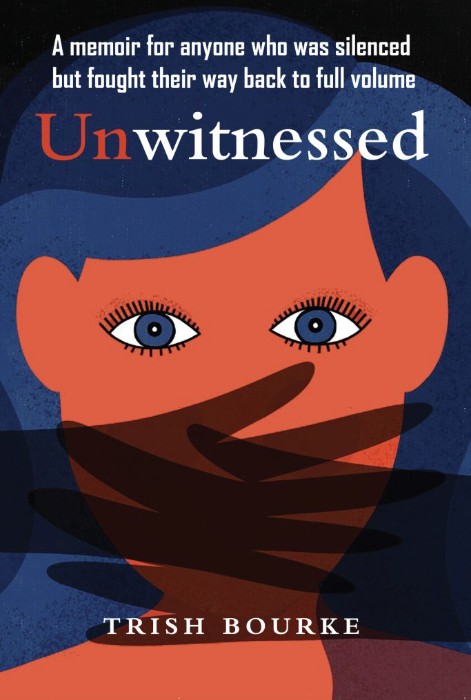
Delighted to say that my book Unwitnessed has been endorsed by Award Winning Writer Dara Waldron, New York Times and Irish Times bestselling author of A Sheepdog Named Oscar. Thrilled it will now appear on the cover of the memoir.
The Waldron endorsement is a real asset
Genuinely fresh angle on a proven category — Irish Catholicism and the Witnesses is a combination I haven't seen. The Dinah and Abraham passages are excellent because they show a child's fear rather than explaining doctrine; more of that and less history would lift this considerably.
Thank you
In reply to The Waldron endorsement is a real asset by Patti Fors
Thank you Patti for your feedback. In terms of less history, what do you mean? Love to know a bit more.
Compelling Subject Matter; Consider Zooming In
The subject matter is incredibly compelling, but I am not sure you have mined it to its full potential. Sometimes, the writing seems a bit too on-the-nose. There is a lot of “telling” where there could be “showing,” a lot of summarizing where there could be true storytelling. Zooming in on an actual account of staying silent and nodding along while classmates discuss a particular film you didn’t get to see would have been particularly poignant. Letting readers into an evening bedtime reading session while your father or mother read one of those children’s Bible tales that terrified you would have been a wise tactic, as well. The toothfairy experience designed by your partner, is another spot that really could have been drawn out and developed for emotional impact. In general, dialog could help bring this alive more, too. This excerpt definitely ends on a cliffhanger, though!
Thank you
In reply to Compelling Subject Matter; Consider Zooming In by Amanda Sue Creasey
Thanks Amanda so much for your feedback. I should have gone with my instincts. The editor took out most of the dialogue saying it was unnecessary in a Memoir. There is dialogue later in the chapters showing the control and the form of conversations that took place. So appreciate your comments.